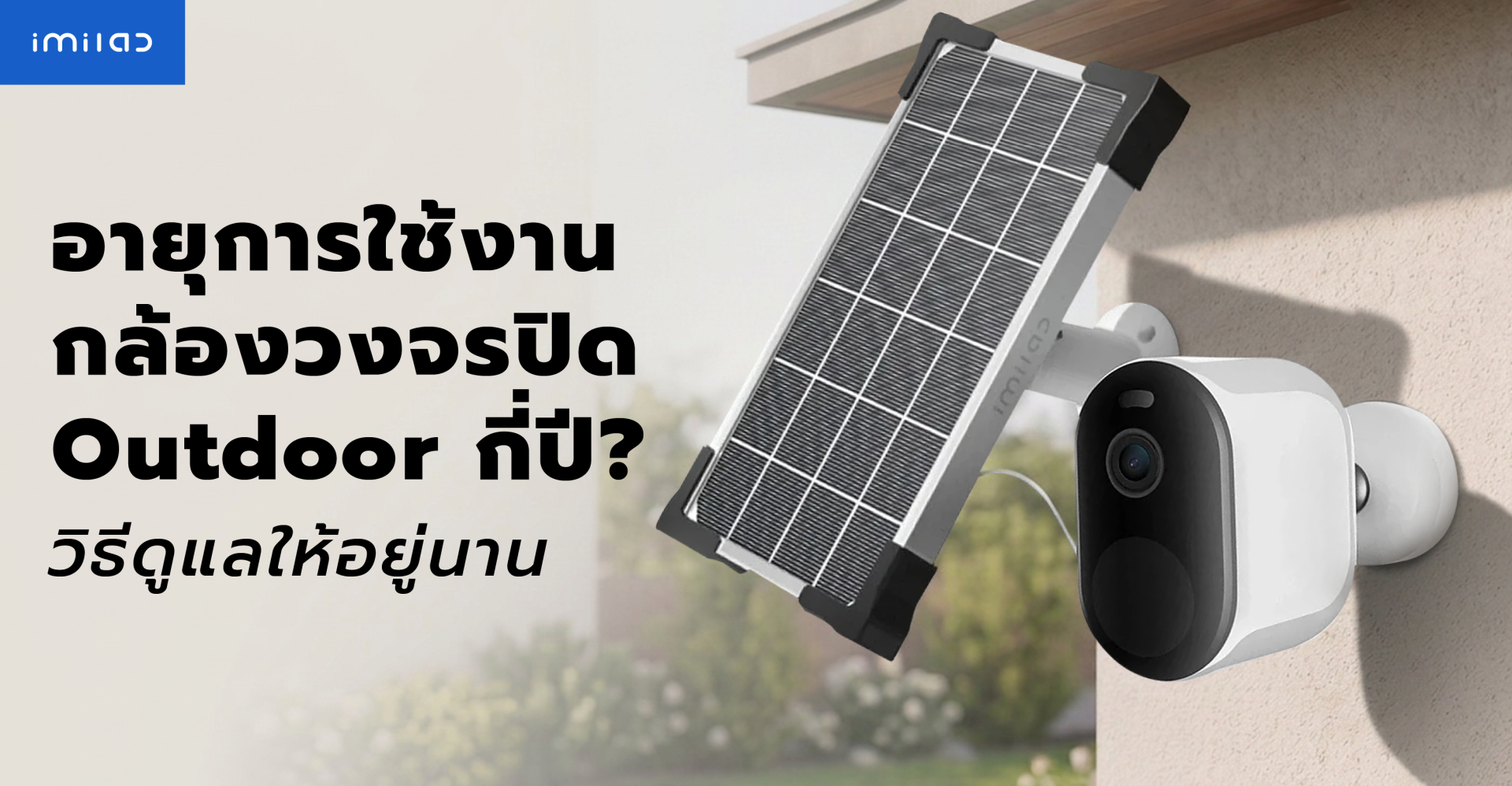
How Long Does an Outdoor Security Camera Last? 7 Factors That Shorten Its Lifespan
Buying an outdoor security camera is an investment in the safety of your home or business. Most people expect it to provide reliable surveillance for many years. However, after only a few years of use, some cameras begin showing unexpected problems.
- Blurry or faded image quality
- Dimmer night vision performance
- Condensation inside the lens
- Random restarts
- Unstable network connection
This often leads to a common question:
"How long should an outdoor security camera actually last?"
The answer depends on much more than the brand name. The lifespan of an outdoor camera is influenced by its build quality, weather protection, installation method, operating environment, and ongoing maintenance.
A well-designed camera with an IP66 weatherproof rating, installed correctly and maintained regularly, can continue operating efficiently for many years even when exposed to rain, humidity, dust, and changing temperatures.
In this guide, we'll explain the average lifespan of an outdoor security camera, explore the seven most common reasons cameras fail earlier than expected, and share practical tips to help extend the life of your surveillance system.
What Is the Average Lifespan of an Outdoor Security Camera?
For most quality products, the average lifespan of an outdoor security camera ranges from approximately 5 to 10 years. Actual lifespan depends on environmental conditions, hardware quality, and how well the camera is maintained throughout its service life.
| Camera Type | Typical Lifespan | Notes |
|---|---|---|
| Indoor Security Camera | 510 Years | Protected from direct sunlight and rain |
| IP66 Outdoor Camera | 58 Years or Longer | Depends on installation quality and maintenance |
| Premium Outdoor Camera | 710 Years | With proper installation and regular care |
These figures are general estimates. Two identical cameras installed on the same day can have significantly different lifespans depending on where and how they are installed.
Why Do Two Identical Cameras Last Different Lengths of Time?
Imagine two homeowners purchasing exactly the same outdoor camera model.
The first camera is mounted beneath a roof overhang, protected from direct sunlight and heavy rain. Its lens is cleaned every few months, and the wiring is properly sealed.
The second camera is installed on an exposed pole, facing intense sunlight every afternoon. Rain constantly hits the housing, while exposed connectors remain vulnerable to moisture.
Although both cameras share identical hardware, their operating environments are completely different.
This explains why security professionals often say:
"Installation conditions influence camera lifespan just as much as hardware quality."
What Determines the Lifespan of an Outdoor Security Camera?
Many buyers assume that weather alone causes cameras to fail, but several factors work together to affect long-term durability.
Some environmental conditions cannot be avoided, while many others can be minimized through proper installation and routine maintenance.
The following seven factors are the most common reasons outdoor security cameras experience premature wear and failure.
Factor 1: Continuous Sunlight and UV Exposure
Although rain often receives the most attention, continuous sunlight is one of the biggest contributors to long-term camera deterioration.
Daily exposure to ultraviolet (UV) radiation can gradually damage external materials and increase internal operating temperatures.
Over time, prolonged sunlight may cause:
- Plastic housing to fade or become brittle
- Rubber seals to harden
- Paint or protective coating to discolor
- Higher internal operating temperatures
Even an outdoor camera designed for weather resistance will benefit from installation under a roof edge, awning, or shaded location whenever possible.
An IP66 rating protects a camera against dust and powerful water jets, but reducing constant UV exposure can significantly extend the lifespan of external materials and internal electronic components.
Factor 2: Rain, Humidity, and Moisture Accumulation
Outdoor security cameras are designed to operate in challenging weather conditions, but long-term exposure to moisture remains one of the most common causes of premature failure.
The real threat is often not rain itself, but persistent humidity and moisture buildup that gradually affects internal components and external connections.
When moisture enters vulnerable areas, it may lead to:
- Lens condensation and fogging
- Corrosion on connectors
- Damage to electronic circuits
- Intermittent power issues
- Reduced overall lifespan
An IP66 outdoor camera offers excellent protection against dust and powerful water jets, making it suitable for rainy environments. However, installers should still avoid locations where water constantly pools, splashes, or remains trapped around cable connections.
Proper waterproofing of power and network connections is just as important as the weather resistance of the camera itself.
Factor 3: Excessive Heat Buildup
Heat is one of the most overlooked threats to electronic equipment, especially in regions with hot climates and long periods of direct sunlight.
Outdoor cameras operate continuously, often 24 hours a day. When combined with high ambient temperatures, internal heat can accumulate over time and accelerate component aging.
The following components are particularly sensitive to prolonged heat exposure:
- Image Sensor
- Main Processor
- Memory Chips
- Power Management Circuits
Heat-related damage typically occurs gradually rather than suddenly. Cameras may continue functioning while performance slowly declines, making the issue difficult to detect until more serious symptoms appear.
Installing cameras in shaded locations and ensuring adequate airflow can help reduce long-term thermal stress.
Factor 4: Poor Installation Practices
Even the highest-quality outdoor security camera can experience a shortened lifespan if it is installed incorrectly.
Improper installation creates unnecessary exposure to environmental risks and often leads to preventable failures.
Common installation mistakes include:
- Mounting the camera in direct sunlight all day
- Leaving connectors exposed to rain
- Skipping waterproof junction boxes
- Failing to create cable drip loops
- Installing near heat-generating surfaces such as metal roofs
- Using weak or unstable mounting hardware
A properly installed camera not only improves image quality and coverage but also significantly extends operational life.
Factor 5: Dust, Insects, and Environmental Debris
Outdoor environments naturally expose security cameras to dirt, dust, pollen, insects, spider webs, and airborne particles.
Over time, these contaminants can interfere with image quality and camera performance.
Potential problems include:
- Reduced image clarity
- Blurred night vision footage
- Infrared reflection caused by spider webs
- False motion alerts
- Reduced AI detection accuracy
A dirty lens may not damage the hardware directly, but it can reduce the effectiveness of the entire surveillance system.
Routine cleaning every few months helps maintain both image quality and long-term reliability.
Factor 6: Power Surges and Electrical Issues
Electrical instability is another major factor that affects outdoor camera lifespan.
Voltage fluctuations, power surges, and lightning-related electrical disturbances can damage sensitive internal circuitry.
This risk is particularly important during rainy seasons when thunderstorms occur more frequently.
Potential consequences include:
- Damaged power adapters
- Mainboard failure
- Storage corruption
- Random system crashes
- Permanent hardware damage
To reduce these risks, many professionals recommend using:
- Surge protectors
- Uninterruptible Power Supplies (UPS)
- Proper electrical grounding
These measures can significantly improve the long-term stability of an outdoor surveillance system.
Factor 7: Lack of Firmware Updates and Preventive Maintenance
Modern security cameras are no longer just hardware devices. Their software plays a critical role in performance, stability, and cybersecurity.
Manufacturers regularly release firmware updates to improve reliability, enhance AI functions, and address security vulnerabilities.
Ignoring firmware updates may result in:
- Reduced network stability
- Motion detection errors
- Compatibility problems with mobile apps
- Security vulnerabilities
- Performance degradation over time
Preventive maintenance is equally important. Regular inspections help identify minor issues before they develop into costly failures.
Checking cables, mounting brackets, waterproof seals, and image quality periodically can greatly extend the useful life of an outdoor camera.
Comparison: Factors That Affect Outdoor Security Camera Lifespan
| Factor | Impact on Lifespan | Preventable? |
|---|---|---|
| Sunlight and UV Exposure | High | |
| Rain and Humidity | High | |
| Heat Buildup | High | |
| Poor Installation | Very High | |
| Dust and Debris | Moderate | |
| Power Surges | High | |
| No Firmware Updates | Moderate |
The Good News: Most Lifespan Problems Are Preventable
Looking at these seven factors, it becomes clear that many causes of premature camera failure are not directly related to manufacturing quality.
Instead, installation choices, environmental conditions, and maintenance habits often have the greatest impact on long-term reliability.
By choosing a weather-resistant camera, installing it correctly, protecting cables and connectors, and performing routine inspections, homeowners and businesses can significantly increase the lifespan of their outdoor security cameras.
In the next section, we'll explore practical maintenance strategies that can help an outdoor camera continue operating efficiently for more than five years.
5 Practical Ways to Extend the Lifespan of Your Outdoor Security Camera
Even the most durable outdoor security camera requires regular maintenance to deliver reliable performance year after year. Fortunately, extending the lifespan of your camera does not require complicated maintenance procedures. A few simple habits can make a significant difference.
Below are five practical maintenance tips recommended for homeowners and businesses using outdoor surveillance systems.
1. Clean the Camera Lens Regularly
The camera lens is constantly exposed to outdoor elements such as dust, rain spots, pollen, insects, spider webs, and pollution. Over time, these contaminants reduce image quality and may interfere with night vision performance.
Instead of using paper towels or rough cloths, clean the lens with a microfiber cloth or a lens-cleaning cloth designed for optical equipment.
For most outdoor installations, cleaning the lens every 3 to 6 months is sufficient. Cameras installed near busy roads, construction sites, or dusty environments may require more frequent cleaning.
2. Inspect the Mounting Bracket and Screws
Strong winds, heavy rain, and continuous vibration can gradually loosen mounting hardware.
Even a slight movement in the camera position may create blind spots or reduce the effectiveness of motion detection.
Inspect the mounting bracket, screws, and wall anchors at least once or twice a year, especially after severe storms or extreme weather events.
3. Check Power Cables and Waterproof Connectors
Many outdoor camera failures originate from damaged cables rather than the camera itself.
Regularly inspect:
- Waterproof junction boxes
- Power connectors
- Network cables
- Rubber sealing rings
- Protective cable covers
Look for signs of:
- Cracked insulation
- Corrosion
- Loose connectors
- Moisture accumulation
- UV damage on exposed cables
Repairing small issues early can prevent expensive hardware failures later.
4. Keep Firmware Updated
Today's outdoor security cameras are smart devices that rely on firmware for performance, stability, AI detection, and cybersecurity.
Manufacturers frequently release firmware updates that may include:
- Improved system stability
- Better AI person and vehicle detection
- Enhanced cybersecurity protection
- Bug fixes
- Compatibility improvements
Installing firmware updates whenever available helps maintain optimal camera performance while reducing security risks.
5. Monitor Camera Performance Regularly
Many people install their security cameras and rarely check them until an incident occurs.
Unfortunately, problems such as blurry images or recording failures often go unnoticed for months.
Perform a quick monthly inspection by checking:
- Live video quality
- Night vision performance
- Motion detection accuracy
- Mobile app notifications
- Recording playback
A five-minute inspection each month can identify problems before they become expensive repairs.
When Should You Replace an Outdoor Security Camera?
Even with excellent maintenance, every electronic device eventually reaches the end of its useful life.
Instead of waiting for complete failure, watch for these warning signs that indicate replacement may be the better long-term solution.
| Warning Sign | Recommendation |
|---|---|
| Blurry images after cleaning the lens | Inspect the image sensor or consider replacement |
| Persistent condensation inside the lens | Weather seals may have deteriorated |
| Frequent unexpected restarts | Check the power supply and internal electronics |
| Firmware is no longer supported | Upgrade to a newer camera model |
| Image quality no longer meets your needs | Consider upgrading to a higher-resolution camera |
How Modern Outdoor Cameras Improve Long-Term Reliability
Outdoor security cameras have improved significantly over the past few years.
Many modern models are designed specifically to withstand challenging outdoor environments while offering smarter surveillance capabilities.
For example, several IMILAB Outdoor Camera models include features such as:
- IP66 weather-resistant protection
- High-resolution video recording
- Smart AI motion detection
- Remote monitoring via smartphone
- Clear day and night surveillance
These features help improve reliability, but proper installation and routine maintenance remain essential for maximizing the camera's service life.
Key Takeaway
The lifespan of an outdoor security camera is not determined by luck.
It depends on several factors working together, including hardware quality, installation practices, weather exposure, electrical protection, software maintenance, and routine inspections.
A quality outdoor camera that is properly installed, protected from excessive environmental stress, and maintained regularly can continue operating reliably for five to ten years, and in many cases even longer.
Small maintenance efforts performed throughout the year can significantly reduce repair costs while ensuring your surveillance system remains ready whenever you need it most.
Frequently Asked Questions (FAQ)
1. How long does an outdoor security camera typically last?
A quality outdoor security camera typically lasts between 5 and 10 years. The actual lifespan depends on product quality, weather conditions, installation methods, maintenance practices, and electrical protection.
2. Does sunlight damage outdoor security cameras?
Yes. Continuous exposure to direct sunlight and ultraviolet (UV) radiation can gradually deteriorate plastic housings, rubber seals, protective coatings, and internal electronic components. Installing a camera beneath an overhang or shaded area can significantly extend its lifespan.
3. Is rain the biggest cause of outdoor camera failure?
Not necessarily. While heavy rain contributes to wear, long-term moisture accumulation and humidity are usually more harmful than rain itself. Proper waterproof installation and protected cable connections are equally important.
4. Does an IP66 rating increase camera lifespan?
An IP66-rated camera provides excellent protection against dust and powerful water jets, making it suitable for outdoor environments. However, correct installation, routine maintenance, and cable protection remain essential for achieving the longest possible service life.
5. How often should I clean my outdoor security camera?
For most installations, cleaning every 3 to 6 months is recommended. Cameras installed near roads, construction sites, or dusty environments may require more frequent maintenance.
6. Should I update my security camera firmware?
Yes. Firmware updates improve system stability, enhance AI detection accuracy, fix software bugs, strengthen cybersecurity, and ensure compatibility with newer mobile applications.
7. When should I replace my outdoor security camera?
Consider replacing your camera if it consistently produces blurry images, develops internal lens condensation, frequently restarts, no longer receives firmware updates, or cannot meet your current security and image quality requirements.
Choosing a Durable Outdoor Security Camera
If you're planning to install a surveillance system outdoors, selecting a camera specifically designed for exterior environments is essential.
Look for features such as:
- IP66 weather-resistant protection
- High-resolution image quality
- Reliable night vision
- AI-powered motion detection
- Remote monitoring via mobile application
Many IMILAB Outdoor Camera models include these capabilities while providing dependable performance in changing weather conditions. Combined with proper installation and regular maintenance, these features can help maximize long-term reliability.
References (HTML with Outbound Links)
- IEC 60529 IP Code Standard
- ONVIF Official Website
- NIST Cybersecurity Resources
- IMILAB Official Website
Conclusion
The lifespan of an outdoor security camera is influenced by far more than the manufacturer's specifications. Installation quality, environmental exposure, routine maintenance, electrical protection, and regular firmware updates all contribute to long-term performance.
Choosing a weather-resistant camera with an IP66 rating, installing it correctly, and performing simple preventive maintenance can help your surveillance system operate reliably for five to ten years or even longer.
Whether you are protecting a home, office, warehouse, or retail store, investing a small amount of time in regular maintenance today can significantly reduce repair costs and extend the useful life of your outdoor security camera for years to come.