What Is the Best CCTV Camera for Elderly Care? How to Choose the Right One
What Is the Best CCTV Camera for Elderly Care? How to Choose the Right One
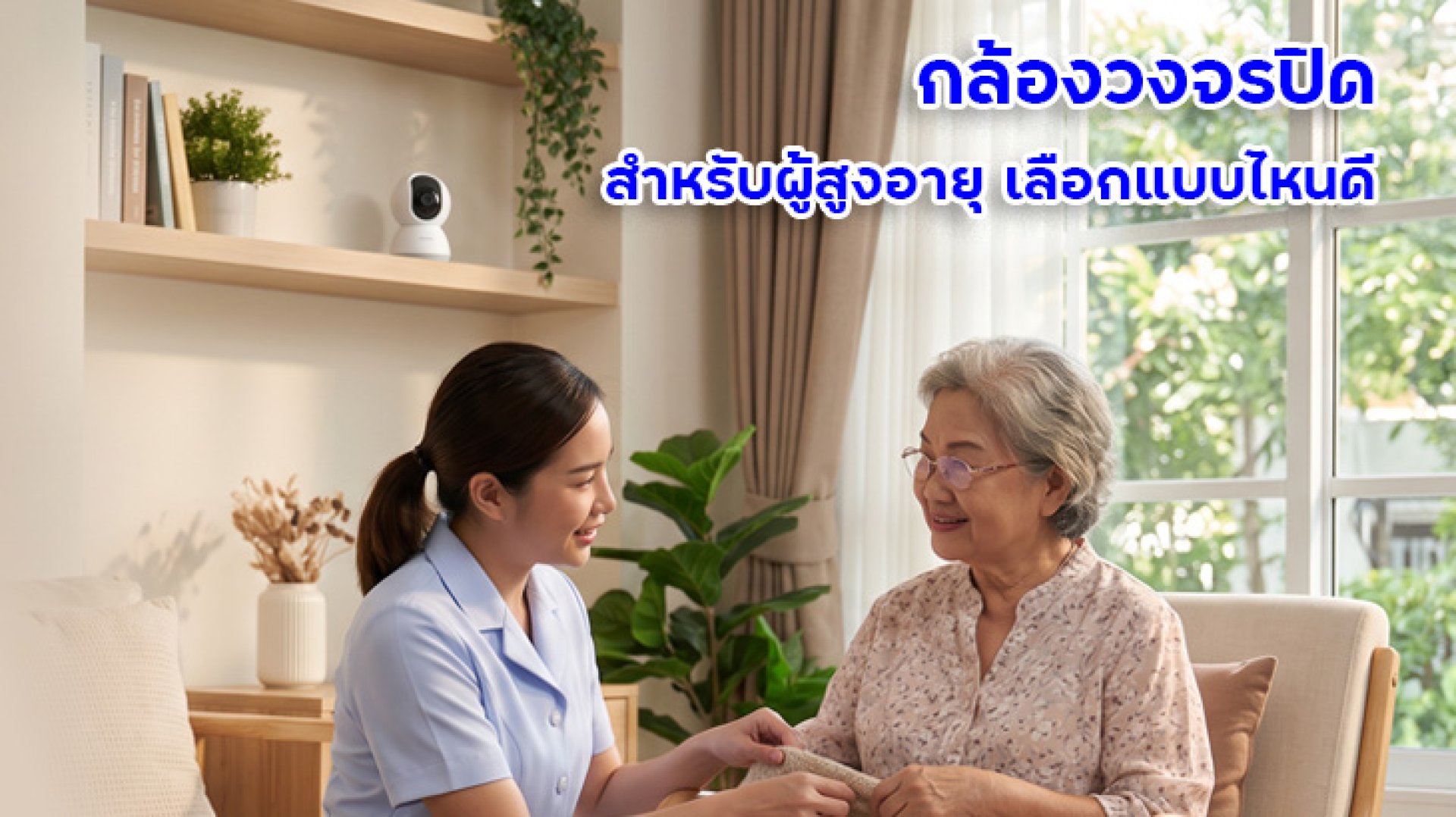
Choosing a CCTV camera for elderly care is not simply about getting the highest resolution or the most expensive camera. What matters more is whether the camera helps family members check on an elderly person easily, receive useful alerts, communicate remotely, and see clearly both during the day and at night.
For families whose parents or grandparents live alone, a smart indoor CCTV camera can provide an additional layer of peace of mind. With features such as mobile remote viewing, Two-Way Audio, AI Human Detection, Night Vision, and automatic tracking, family members can check what is happening at home even when they are away.
What Features Should You Look for in a CCTV Camera for Elderly Care?
Before choosing a camera, consider how it will actually be used. The most important features are not necessarily the ones with the highest specifications, but the ones that solve everyday problems.
| Feature | Why It Matters for Elderly Care |
|---|---|
| Mobile Viewing | Allows family members to check the elderly person remotely. |
| Two-Way Audio | Allows family members to talk to the elderly person through the camera. |
| AI Human Detection | Helps distinguish people from general movement. |
| Human Tracking | Automatically follows a moving person within the camera's coverage area. |
| Night Vision | Helps monitor the home when lighting is low or during nighttime. |
| Wide Viewing Angle | Reduces blind spots in rooms and common areas. |
| MicroSD / Cloud Storage | Provides options for reviewing recorded footage. |
| Easy App Sharing | Allows multiple family members to view the camera. |
1. Mobile Viewing Is One of the Most Important Features
For elderly care, being able to view the camera remotely from a smartphone can be more useful than simply having a high-resolution camera.
For example, if your parents are at home while you are at work, you can open the app to check whether they are in the living room, whether they are moving around normally, or whether something unusual is happening.
A good system should provide a simple mobile application that makes it easy to access live video without requiring complicated technical knowledge.
2. Two-Way Audio Makes Remote Communication Easier
Two-Way Audio is particularly useful for elderly people because it allows family members to communicate without making a phone call.
For example:
- Ask whether they have already had lunch.
- Remind them about an appointment.
- Tell them that a family member is coming home.
- Talk to them when they are in another room.
This feature can make a CCTV camera function as more than a security device. It can also become a simple communication tool for the family.
3. Human Detection vs Motion Detection: Which Is Better?
When choosing a CCTV camera for elderly care, it is worth understanding the difference between Motion Detection and Human Detection.
| Feature | Motion Detection | Human Detection |
|---|---|---|
| Detects | General movement | People |
| Possible False Alerts | Higher | Generally lower |
| Moving Curtains | May trigger an alert | Usually does not trigger a human alert |
| Moving Shadows | May trigger an alert | Generally less likely |
| Suitable for Elderly Care | Useful | More suitable for targeted alerts |
For elderly care, AI Human Detection can be more useful because it focuses alerts on human activity instead of sending notifications every time something in the room moves.
4. Pan, Tilt, and Human Tracking Can Reduce Blind Spots
A fixed camera only covers a specific viewing area. If the elderly person moves outside that area, the camera may no longer capture them.
A camera with Pan & Tilt or Human Tracking can provide wider coverage and automatically follow movement.
This can be useful in areas such as:
- Living rooms
- Bedrooms
- Hallways
- Large common areas
However, automatic tracking should not be treated as a complete replacement for proper camera placement. The camera should still be positioned to cover important areas effectively.
5. Night Vision Is Important for Monitoring at Night
Elderly people may move around the house during the night. A CCTV camera should therefore provide clear images even when the room is dark.
Traditional IR Night Vision can provide black-and-white images in darkness, while Full-Color Night Vision can provide color images when sufficient lighting is available.
When comparing cameras, do not look only at the term Night Vision. Consider how the camera performs in the actual environment where it will be installed.
6. What Resolution Is Enough?
You do not necessarily need a 4K CCTV camera for elderly care.
A camera with 2.5K or 3K resolution may already provide enough detail for common indoor monitoring situations. The more important consideration is whether the image remains clear when you need to identify what is happening.
Resolution should therefore be considered together with:
- Viewing angle
- Lens quality
- Night vision performance
- Lighting conditions
- Camera placement
7. Cloud Storage vs MicroSD: Which Is Better?
Recorded footage can be stored using a MicroSD card, cloud storage, or sometimes both.
| Storage Method | Advantages | Considerations |
|---|---|---|
| MicroSD | Local storage and no continuous cloud subscription required | The card has limited capacity and may eventually need replacement. |
| Cloud | Remote access and convenient backup | May require a subscription depending on the service. |
| MicroSD + Cloud | Provides more flexibility and redundancy | Cloud service conditions and storage limits should be checked. |
For elderly care, having recorded footage can be useful when you need to review an event that happened earlier rather than relying only on live viewing.
8. Can Multiple Family Members View the Same Camera?
If several family members are responsible for elderly care, camera sharing can be extremely useful.
For example, one person may normally check the camera during the day while another family member checks it in the evening.
A camera ecosystem such as Xiaomi Home / Mi Home may provide sharing features that allow authorized family members to access the camera through their own accounts.
Always use account security features such as strong passwords and two-factor authentication where available, and only share access with people who actually need it.
9. Privacy Should Not Be Overlooked
A CCTV camera used for elderly care is installed inside a private home, so privacy should be considered just as carefully as security.
Avoid pointing cameras unnecessarily at private areas. Bedrooms and bathrooms require particular care, and family members should understand when and where cameras are operating.
If the camera supports a Privacy Mode, consider using it when monitoring is not necessary.
Camera accounts should also be protected with strong passwords and two-factor authentication where supported.
10. Where Should You Install a CCTV Camera for Elderly Care?
The best position depends on the elderly person's daily routine and the layout of the home.
Living Room
The living room is often one of the most useful locations because it is a common area where elderly people spend significant amounts of time.
Bedroom
If monitoring the bedroom is necessary, privacy should be carefully considered. Camera placement should focus only on the area that genuinely needs monitoring.
Hallway
A hallway camera can help monitor movement between different areas of the home, particularly when the elderly person frequently moves between rooms.
Front Door
A camera facing the entrance can help monitor visitors and deliveries. For outdoor installation, choose a model designed for outdoor conditions rather than using an indoor camera outside.
Indoor vs Outdoor CCTV for Elderly Care
| Type | Best Use | Important Features |
|---|---|---|
| Indoor CCTV | Living room, bedroom, hallway | Two-Way Audio, Human Detection, Pan/Tilt, Night Vision |
| Outdoor CCTV | Front door, yard, driveway | Weather resistance, Night Vision, Human/Vehicle Detection |
Which CCTV Camera Is Suitable for Elderly Care?
If the main purpose is to monitor an elderly family member at home, prioritize features based on actual daily use rather than simply choosing the camera with the highest specifications.
A practical combination would be:
- Mobile Viewing for remote monitoring
- Two-Way Audio for communication
- AI Human Detection for more useful alerts
- Human Tracking for wider monitoring coverage
- Night Vision for nighttime monitoring
- MicroSD or Cloud Storage for reviewing events
- Camera Sharing for multiple family members
- Privacy and account security features for safer use
For example, the IMILAB C21 combines 4MP 2.5K video, Color Night Vision, Human Detection and Tracking, abnormal sound detection, alerts, Two-Way Audio, MicroSD and Cloud storage options, as well as Xiaomi Home support.
The IMILAB C22 also provides AI Motion/Human Detection and Tracking, Full-Color Night Vision, abnormal sound detection, Two-Way Audio, Privacy Mode, Mi Home support, and MicroSD storage support.
For households that want to monitor more than one area with a single device, the IMILAB C30 Dual uses a dual-camera design and includes AI detection features, Two-Way Audio, Color Night Vision, and Xiaomi Home support.
Conclusion
The best CCTV camera for elderly care is not necessarily the camera with the highest resolution or the most expensive specifications. Instead, choose a model that makes remote monitoring simple, provides useful notifications, allows two-way communication, and delivers reliable images during both daytime and nighttime.
For most homes, the combination of Mobile Viewing + Two-Way Audio + Human Detection + Tracking + Night Vision + reliable storage provides a practical starting point.
Most importantly, remember that CCTV should support elderly care rather than replace regular human contact. Technology can help families stay connected, but regular communication and appropriate personal care remain essential.
Frequently Asked Questions
What is the best CCTV camera for elderly care?
Look for a camera with Mobile Viewing, Two-Way Audio, Human Detection, Night Vision, a wide viewing angle, and reliable recording options. Pan/Tilt or Human Tracking can also be useful in larger rooms.
Can I use a CCTV camera to talk to an elderly person?
Yes. A camera with Two-Way Audio allows family members to communicate with the elderly person through a smartphone app.
Is Human Detection better than Motion Detection for elderly care?
Human Detection can be more useful when you want alerts related specifically to people. Basic Motion Detection may generate more alerts because it can respond to general movement.
Do I need a 4K camera to monitor an elderly person?
Not necessarily. A good 2.5K or 3K camera can be sufficient for many indoor monitoring situations. Lens quality, lighting, viewing angle, and camera placement are also important.
Can multiple family members view the same CCTV camera?
Some smart CCTV systems support camera sharing, allowing authorized family members to view the same camera through their own accounts.
Should I use Cloud or MicroSD storage?
Both have advantages. MicroSD provides local storage, while Cloud storage can make remote access and backup more convenient. A camera supporting both options provides greater flexibility.