How Many CCTV Cameras Does a Two-Story House Need? How to Plan the Right Camera Placement
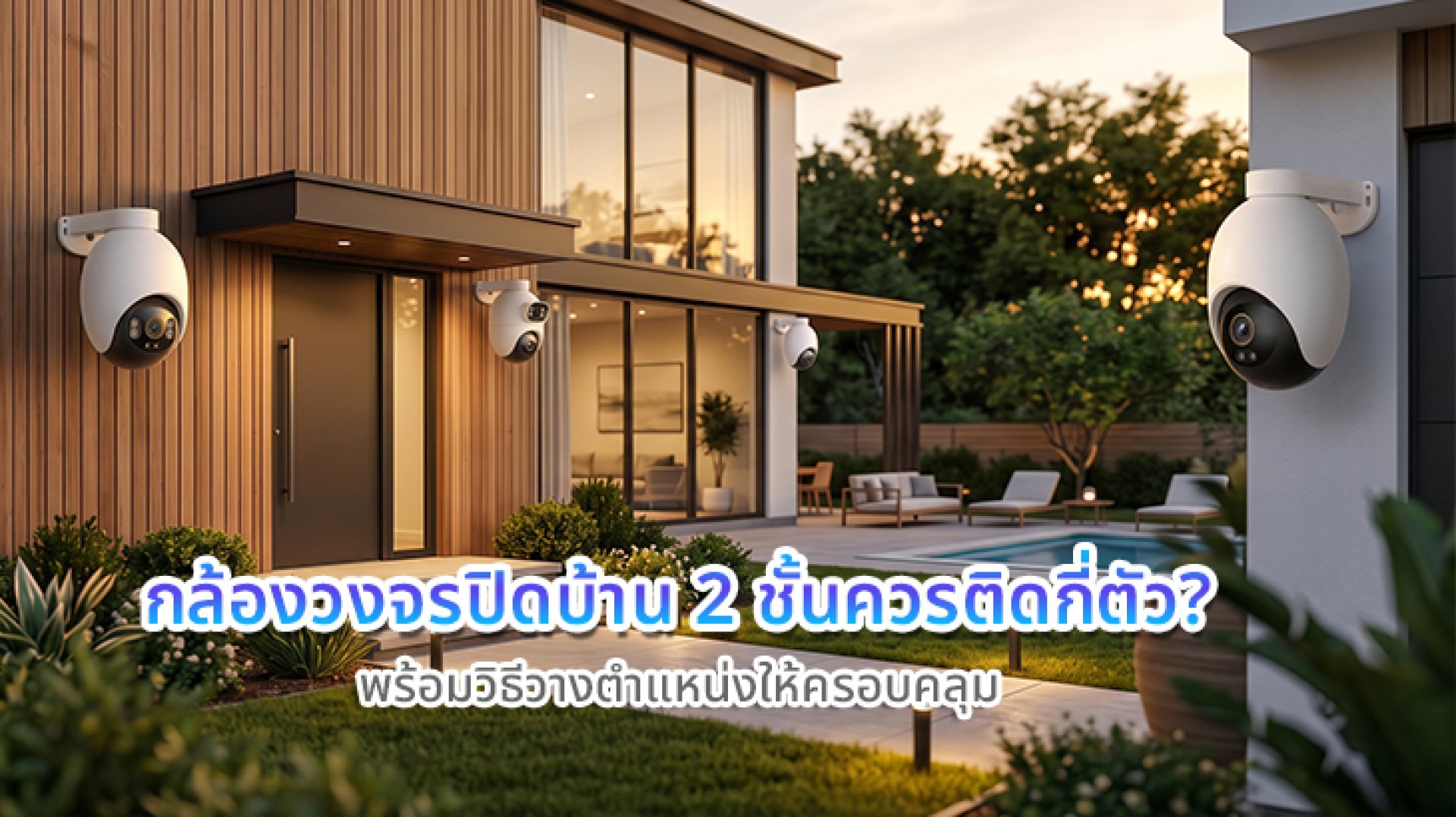
How many CCTV cameras does a two-story house actually need? Many homeowners start with a simple idea: Four cameras should be enough. But after installation, they may discover blind spots, a camera that only sees the front door but not the approach path, or an upstairs area that is completely uncovered.
The truth is that there is no fixed number of CCTV cameras that every two-story house needs. The right number depends on the size and layout of the property, the number of entrances, the location of stairs, the garage, the backyard, side entrances, and the areas you actually want to monitor.
Instead of asking only How many cameras do I need?, a better question is: What should each camera be responsible for monitoring?
This guide explains how to estimate the number of cameras you need and how to plan CCTV camera placement for a two-story home.
How Many CCTV Cameras Does a Two-Story House Need?
For a typical two-story house, a starting point of around 48 cameras can be reasonable. However, this is only a planning range, not a universal rule.
| House Type | Approximate Number of Cameras | Typical Approach |
|---|---|---|
| Small two-story house | 4 cameras | Focus on the front, rear, and key indoor areas |
| Medium two-story house | 56 cameras | Add the garage, side entrance, stairs, or key hallway |
| Large two-story house | 68+ cameras | Divide the property into zones and minimize blind spots |
Two homes with the same floor area may still require different camera counts because their entrances, windows, garages, gardens, and internal layouts can be completely different.
A better approach is to walk around the property and ask: If someone approaches this house, which route would they take? Then place cameras around those important routes and entry points.
What Should You Consider Before Installing CCTV Cameras?
Before buying cameras, divide your two-story house into four basic categories:
- Entry points: front door, back door, side doors, gates, and garage entrances
- Travel routes: hallways, stairs, and passages between important areas
- Important indoor areas: living rooms, common areas, home offices, or areas containing valuable equipment
- Outdoor areas: driveway, garage, garden, patio, and side passages
Good camera placement is not simply about filling every available space with a camera. Each camera should have a clear purpose.
Current home security camera placement guidance emphasizes entry points, main stairs or hallways, driveways, and other areas that people must pass through. It also recommends checking the actual camera view before permanently mounting the device.
Where Should You Place CCTV Cameras Around a Two-Story House?
1. Front Door and Main Entrance
The front entrance is usually one of the first locations to consider.
The camera should ideally capture both the doorway and the approach path, rather than pointing directly at the door and nothing else.
This allows the camera to capture more useful movement as someone approaches the house.
Pay attention to:
- The path leading to the front door
- The porch or entrance area
- The visitor's face
- Package delivery areas
- Gates or driveway approaches
Ring's current installation guidance recommends positioning outdoor security cameras approximately 810 feet (2.53 meters) above the ground with an adjustable downward angle. The exact position should still be adapted to the camera model and property layout.
2. Back Door
Many homeowners focus heavily on the front of the house and forget the rear entrance.
If your home has a back door leading to a garden, patio, alley, or another accessible area, consider placing a camera so that it covers both the entrance and the approach route.
This is particularly important when the rear of the property is less visible from the street.
3. Side Entrance or Garage Access
A side door or garage entrance can create another route into the house.
If your garage is connected directly to the home, consider the path between the garage and the main living area when planning your camera coverage.
Depending on the layout, one outdoor camera may cover the driveway and garage entrance, while another indoor camera can cover the connecting hallway.
4. Main Stairway
The main staircase is one of the most useful locations to consider in a two-story house.
Stairs create a natural connection between the first and second floors. A camera positioned around the main stairway or nearby hallway can monitor movement between the two levels without requiring a separate camera in every upstairs room.
Security.org also identifies main stairs or hallways as strategic locations because they are routes people would need to pass through to access other parts of the home.
5. Living Room or Main Common Area
The living room is often a high-traffic area where family members spend time and move between different parts of the house.
For an indoor camera, a corner position can provide a wider view of the room. Ring recommends corner placement for indoor cameras when the goal is to maximize coverage.
However, avoid positioning the camera where it unnecessarily records private areas.
Example: Four CCTV Cameras for a Two-Story House
If you have a relatively small two-story home and want to start with four cameras, you could assign each camera a specific role:
| Camera | Suggested Location | Primary Purpose |
|---|---|---|
| Camera 1 | Front of the house | Monitor the main entrance and approach path |
| Camera 2 | Back of the house | Monitor the rear entrance and outdoor area |
| Camera 3 | First floor | Monitor the living room or main common area |
| Camera 4 | Stairway / second-floor hallway | Monitor movement between floors |
This is a starting configuration rather than a fixed recommendation. Your actual floor plan may require a different arrangement.
Example: Six CCTV Cameras for a Two-Story House
A medium-sized home with a garage, side entrance, or larger outdoor area may benefit from dividing the property into more monitoring zones.
| Camera | Suggested Location | Primary Purpose |
|---|---|---|
| Camera 1 | Front entrance | Monitor the main approach |
| Camera 2 | Garage / driveway | Monitor vehicles and the garage approach |
| Camera 3 | Rear entrance | Monitor the back door and garden |
| Camera 4 | First-floor living room | Monitor the main common area |
| Camera 5 | Main staircase | Monitor movement between floors |
| Camera 6 | Second-floor hallway | Monitor the main upstairs passage |
The advantage of this approach is that every camera has a defined monitoring area, which can make live viewing and reviewing recorded footage easier.
How Many Cameras Should You Install on the First Floor?
The first floor often deserves more attention because it usually has more direct connections to the outside, such as the front door, back door, garage, side entrance, and ground-floor windows.
A basic layout could include:
- 1 camera at the front entrance
- 1 camera at the rear entrance
- 1 camera covering the garage or side entrance
- 1 indoor camera covering the main living area
However, a house with only one main entrance and an open floor plan may require fewer cameras.
Security.org recommends prioritizing ground-floor doors and windows when planning home security camera placement.
Should You Install a CCTV Camera on the Second Floor?
It depends on the layout. You do not necessarily need cameras in every upstairs room.
If the second floor contains bedrooms connected by a single hallway, a camera near the main hallway or stairway may provide useful coverage without placing a camera inside every room.
However, consider additional coverage if the second floor has:
- A balcony
- An exterior door
- Large accessible windows
- A roof or structure that provides access to upper-floor windows
Recent camera-placement guidance also recommends considering upper-floor windows when they can be reached from climbable structures such as roofs, trees, or balconies.
Is the Stairway a Good Place for a CCTV Camera?
Yes. In many two-story homes, the staircase is a useful monitoring point because it connects the two floors.
However, camera positioning matters. If the camera is installed incorrectly, it may capture mostly the stairs or ceiling instead of the people using them.
Before drilling holes, use the camera's Live View to test the angle. Walk up and down the stairs and check whether the important area remains visible.
Ring also recommends adjusting camera angles according to stairs, changes in elevation, and the direction of the approach path.
How High Should a CCTV Camera Be Mounted?
There is no single height that works for every camera and every property. The correct position depends on the camera's field of view, mounting design, purpose, and surrounding environment.
For outdoor security cameras, Ring recommends approximately 810 feet (2.53 meters) above the ground with a downward tilt of around 20 degrees. Indoor cameras can be mounted up to approximately 8 feet (2.5 meters), depending on the camera and room layout.
The goal is to find a balance:
- High enough to make the camera harder to interfere with
- Low enough to capture useful human details
- Angled correctly toward the activity area
- Free from major obstructions
Mounting a camera too high can produce footage that shows the top of a person's head rather than useful facial detail.
Which Direction Should a Front-Facing Camera Point?
Avoid pointing a camera directly toward strong light sources whenever possible.
Direct sunlight, bright outdoor lights, or strong backlighting can reduce image quality and make people appear as dark silhouettes.
Instead, try to position the camera so that it captures the approach path and entrance while avoiding unnecessary glare.
Camera placement guidance also recommends avoiding direct sunlight, glare, and obstructions and testing the view in both daytime and nighttime conditions.
Can One CCTV Camera Cover an Entire Floor?
Sometimes, but you should not assume that one camera can always cover an entire floor.
The answer depends on:
- Field of View (FOV)
- Room shape
- Wall locations
- Furniture
- Camera mounting position
- Distance to the areas you want to monitor
An open-plan living area may be easy to cover with one wide-angle camera. A floor divided into several rooms can create multiple blind spots.
Using one camera to cover everything can result in a very wide image where important subjects appear too small. Sometimes adding a second camera in a strategic location produces much more useful coverage.
Is a 360-Degree Camera Good for a Two-Story House?
A 360-degree or Pan/Tilt camera can provide broad coverage in certain situations, but it does not automatically replace multiple cameras.
For example, a Pan/Tilt camera may work well in a large open-plan living room. However, if you need to monitor the front entrance, backyard, and garage simultaneously, separate cameras may be more practical because each camera can continuously monitor its assigned area.
Remember that a camera that physically moves may not be looking at the right direction at the exact moment an event occurs.
Do Not Forget Privacy When Planning CCTV Cameras
Home security cameras should monitor areas that actually require monitoring while minimizing unnecessary recording of private spaces.
For indoor cameras, avoid placing cameras in highly private areas such as bedrooms and bathrooms unless there is a specific, legitimate reason and appropriate consent.
For outdoor cameras, avoid unnecessarily recording neighboring properties or public areas. If your camera supports Privacy Zones, use them to block areas that should not be recorded.
Ring specifically advises users to consider local requirements regarding recording neighboring properties and public spaces and provides Privacy Zones as a way to limit the camera's field of view.
How to Calculate the Number of CCTV Cameras for a Two-Story House
Instead of choosing a number first, use this five-step process:
- List every entry point front door, back door, side door, gate, and garage.
- Map the main travel routes hallways, stairs, driveways, and side passages.
- Identify blind spots areas that existing cameras cannot see.
- Mark important areas living room, garage, garden, home office, or other areas that require monitoring.
- Test the camera views use Live View during both day and night before permanently installing the camera.
This process makes it easier to determine whether your home actually needs four, five, six, or more cameras.
Example: How Many Cameras Does a Two-Story House Need?
| House Layout | Suggested Approach | Approximate Number |
|---|---|---|
| Small home with one main entrance | Front, rear, common area, and stairs | 4 cameras |
| Medium home with a garage | Add garage or side entrance coverage | 56 cameras |
| Home with multiple entrances | Assign coverage to each important entry point | 6+ cameras |
| Large property | Divide the property into zones and minimize blind spots | 68+ cameras |
A simple rule to remember: the number of cameras is determined by the number of important entry points + travel routes + blind spots + camera coverage range, not simply by the number of floors.
Common CCTV Placement Mistakes in Two-Story Homes
1. Installing Cameras Only at the Front Door
A front camera can be useful, but it does not cover the rear entrance, side passage, garage, or backyard.
2. Installing Cameras Too High
A very high camera may provide a large overview but can make faces difficult to capture clearly.
3. Pointing Cameras Directly at Bright Windows
Strong backlighting can reduce image quality and make people appear dark.
4. Ignoring the Side of the House
Side passages can become blind spots, especially when they connect the front and rear parts of the property.
5. Installing Cameras Without Testing the View
A camera can be technically working while still missing the area you actually wanted to monitor. Always test the view before permanent installation.
6. Trying to Make One Camera Do Everything
A wide-angle camera can cover a large area, but important subjects may appear too small. Give each camera a clear primary purpose.
Should You Use Indoor or Outdoor CCTV Cameras?
The camera should match the environment where it will be installed.
| Location | Recommended Camera Type | Important Features |
|---|---|---|
| Front entrance | Outdoor camera | Night vision, weather resistance, suitable FOV |
| Backyard | Outdoor camera | Weather resistance, night vision, wide coverage |
| Garage | Indoor or outdoor depending on location | Low-light performance, suitable FOV |
| Living room | Indoor camera | Wide-angle view, privacy controls |
| Stairway | Indoor camera | Suitable vertical coverage, motion detection |
| Second-floor exterior | Outdoor camera | Weather resistance and appropriate night vision |
What About Wi-Fi Cameras in a Two-Story House?
Wi-Fi cameras can be convenient because they reduce the need for dedicated network cables, but a two-story home can create additional Wi-Fi challenges.
Concrete floors, walls, metal structures, furniture, and distance from the router can affect signal quality.
Before installing a Wi-Fi camera permanently, check the Wi-Fi signal at the exact location where the camera will be mounted.
For larger homes, consider whether you need a better router, additional access points, or a wired connection for certain cameras.
Final Answer: How Many CCTV Cameras Does a Two-Story House Need?
For a typical two-story home, 48 cameras can be a useful starting range, but there is no universal number that works for every house.
Start with the most important locations:
- Front entrance
- Back entrance
- Side entrance or garage
- Main living area
- Main staircase or connecting hallway
- Important blind spots
A small, open-plan home may need fewer cameras, while a larger property with several entrances, a garage, garden, side passages, or accessible upper-floor areas may require more.
The goal is not to install as many cameras as possible. The goal is to make sure every camera has a clear purpose and that important areas do not remain hidden in blind spots.
FAQ
How many CCTV cameras should a two-story house have?
A typical two-story house may start with around 48 cameras, but the actual number depends on the property layout, entrances, garage, stairs, outdoor areas, and blind spots.
Should I install more cameras on the first or second floor?
Prioritize important entry points and vulnerable areas rather than simply counting floors. The first floor often has more direct connections to outdoor areas, while the second floor may need coverage around stairs, hallways, balconies, or accessible windows.
Is it a good idea to install a camera near the stairs?
Yes. A main stairway can be an effective monitoring point because it connects the two floors. Test the camera angle carefully so that people using the stairs remain visible.
Can one CCTV camera cover an entire floor?
It depends on the field of view, room layout, walls, furniture, and camera position. An open-plan floor may be possible, but multiple rooms often require more than one camera to minimize blind spots.
How high should a CCTV camera be installed?
For outdoor security cameras, Ring recommends approximately 810 feet (2.53 meters) above the ground with an appropriate downward angle. Indoor cameras can generally be installed up to around 8 feet, depending on the model and room layout.
Should I install CCTV cameras inside bedrooms?
Not necessarily. For privacy reasons, it is generally better to focus indoor monitoring on common areas, entrances, and main hallways rather than private spaces. Bedrooms and bathrooms should normally be excluded unless there is a specific and appropriate reason.
Related Articles
- How Much Internet Does a 3K / 4K CCTV Camera Use?
- CCTV Wi-Fi Keeps Disconnecting: Causes and How to Fix It
References