Where Is the Best Place to Install CCTV at Home? 7 Key Spots You Should Consider
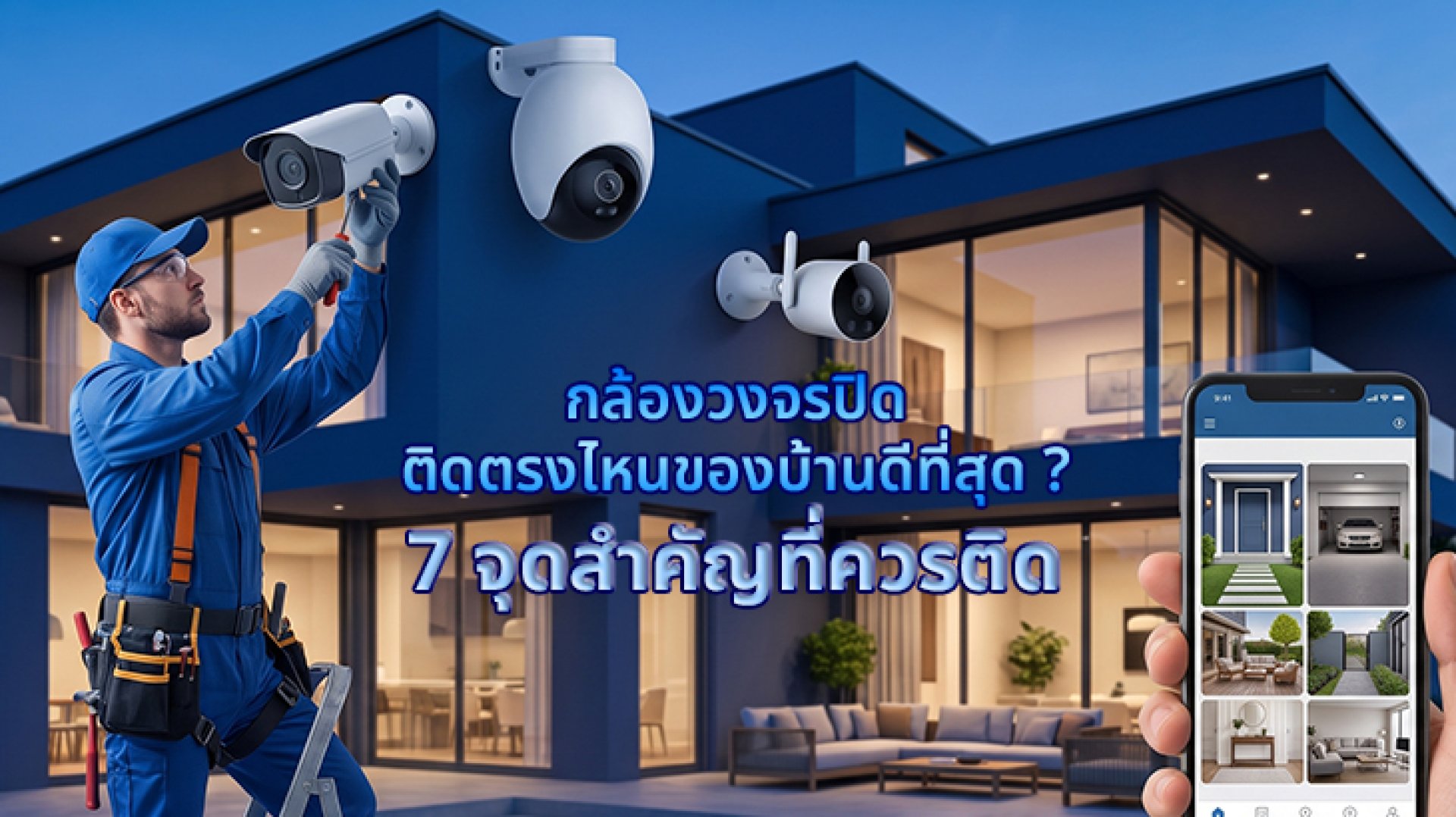
Buying a CCTV camera is only half the job. The other half is choosing the right location.
Even a high-resolution CCTV camera can become less useful if it is installed in the wrong position, points directly at the sun, or leaves important areas outside its field of view.
So, where should you install CCTV cameras around your home? Let's look at 7 important locations, along with practical tips for choosing the right angle and reducing blind spots.
Where Should You Install CCTV Cameras at Home?
As a general rule, start with areas where people are most likely to enter or pass through your property. These include the front door, back and side doors, driveway, yard, side paths, and important indoor pathways such as hallways or stairs.
Security camera placement guides commonly recommend prioritizing ground-floor entry points, driveways, main hallways, and other high-traffic areas.
7 Important Places to Install CCTV Cameras
1. Front Door
The front door should usually be one of the first locations to consider.
This is where visitors, delivery drivers, family members, and other people approaching the house are most likely to appear. A camera positioned here can help you see who is approaching the entrance before they reach the door.
For better coverage, avoid pointing the camera too far upward or directly toward the sky. Adjust the angle so the entrance area and the approach to the door are both visible.
If you use a video doorbell, it can also be used alongside a CCTV camera to provide another view of the entrance.
2. Back Door and Side Doors
Don't focus only on the front of the house.
Back and side doors can also be important access points, especially if they are hidden from the street or located in less visible areas.
Installing a camera near these entrances can help reduce blind spots around the sides and rear of the property. Security camera placement guides also recommend covering secondary entrances such as back and side doors.
3. Garage and Driveway
If your home has a garage or driveway, this is another useful location for a CCTV camera.
A camera can monitor vehicles entering and leaving, the area in front of the garage, and activity around equipment or other property stored outside.
For a driveway, position the camera so that it covers as much of the driving and walking area as possible without creating unnecessary blind spots. Driveways and garages are commonly recommended areas for outdoor camera coverage.
4. Vehicle Entrance or Front Road
If your property has a gate or vehicle entrance, consider installing a camera that can clearly monitor this area.
This can be especially useful for larger homes where the front door and vehicle entrance are separated by a significant distance.
However, avoid positioning the camera so that it unnecessarily records areas outside your property. The goal is to monitor your own entrance and surrounding property while respecting other people's privacy.
5. Front Yard and Backyard
The yard is another area that is easy to overlook.
A camera with a wide field of view can monitor open areas around the house and help identify activity before someone reaches an entrance.
For outdoor cameras, make sure the camera is designed for outdoor use and has an appropriate weather-resistance rating for its installation location.
Also check for trees, walls, fences, and other objects that could block the camera's view.
6. Side Paths and Potential Blind Spots
Walk around your house and look for areas that are difficult to see from the front or back.
Side passages, narrow paths, gates, fence lines, and areas behind extensions can easily become blind spots.
This is where a second camera can sometimes be more useful than simply buying a camera with a wider lens.
For larger properties, overlapping coverage between cameras can help reduce important blind spots.
7. Main Hallway or Staircase Inside the Home
Outdoor cameras are important, but indoor placement can also be useful.
A main hallway or staircase can act as a natural path through the house. A camera positioned here may be able to monitor movement between different areas of the home.
For indoor cameras, corners are often useful because they can provide a wider view of a rectangular room.
However, avoid placing cameras in bathrooms, changing areas, or other locations where people reasonably expect privacy.
Why a Wider View Isn't Always Better
It may seem like a camera with an extremely wide viewing angle is always the better choice. But that's not necessarily true.
A very wide-angle lens can cover more area while making objects farther from the camera appear smaller. This can reduce the useful detail in important areas such as doors or gates.
Instead of trying to make one camera cover everything, consider dividing your home into several coverage zones.
For example:
- Camera 1: Front door
- Camera 2: Driveway and garage
- Camera 3: Back or side entrance
- Camera 4: Backyard or side passage
This approach can provide more practical coverage than relying on one camera with an extremely wide field of view.
How High Should a CCTV Camera Be Installed?
A commonly recommended installation height for home security cameras is around 810 feet, or approximately 2.43 meters above the ground. This can provide a useful field of view while making the camera harder to reach or tamper with.
However, the exact height depends on the camera model, lens angle, mounting surface, and the area you want to monitor.
Don't simply install the camera as high as possible. If the camera is too high and points sharply downward, important details such as faces may become harder to capture.
Don't Point the Camera Directly at the Sun
One common installation mistake is choosing a location based only on coverage.
If the camera faces the sun for part of the day, glare and strong backlighting can reduce image quality and make people or objects harder to identify.
Whenever possible, position the camera away from direct sunlight and take advantage of walls, roof eaves, or other structures that can provide some shade.
Should You Install a CCTV Camera in a Corner?
In many situations, yes.
Mounting a camera near a corner can allow it to see along two directions at the same time. This can be particularly useful in rectangular rooms, side passages, and exterior corners of a house.
But don't assume every corner is automatically ideal. Check the actual camera view before drilling holes or permanently mounting the device.
PTZ or Fixed Camera: Which One Should You Use?
The right choice depends on the location.
A Fixed Camera is useful when you already know exactly which area you want to monitor, such as a front door, garage, or side entrance.
A PTZ Camera can be useful when you need to monitor a larger area and want the camera to pan, tilt, or zoom to different directions.
However, a PTZ camera should not automatically replace several fixed cameras. If the camera is looking in one direction, another area may temporarily be outside its view.
For critical entry points, a fixed camera can provide continuous coverage of a specific area.
Don't Forget Wi-Fi and Power
Even the perfect camera position won't help if the camera cannot maintain a reliable connection.
Before permanently installing a Wi-Fi camera, test the Wi-Fi signal at the exact location. Also check whether the camera is close enough to a power source or whether you need a battery or solar-powered model.
Outdoor installation may require additional consideration for power cables, weather exposure, and the camera's IP rating.
How to Reduce CCTV Blind Spots
Before installing the camera, walk around your property and identify areas that are hidden from view.
Then check:
- Are all important entrances visible?
- Can a person approach the house without appearing on camera?
- Are trees, walls, fences, or vehicles blocking the view?
- Does the camera still provide a useful image at night?
- Does direct sunlight affect the image during part of the day?
- Is the Wi-Fi signal strong enough at the installation point?
It's also a good idea to test the camera before permanently mounting it. This allows you to check the viewing angle, image quality, Wi-Fi connection, and motion detection before drilling into the wall.
Where Should You Avoid Installing CCTV Cameras?
Not every location needs a camera.
Avoid installing cameras in places where people reasonably expect privacy, such as bathrooms and changing areas. Bedrooms may also require special consideration depending on the purpose of the camera and who can access the footage.
You should also avoid unnecessarily recording areas belonging to neighbors or other private properties.
For more information about privacy and PDPA considerations when installing CCTV in Thailand, see our related guide:
รู้ก่อนติดกล้องวงจรปิด ไม่ให้ผิด PDPA
Summary: Where Should You Install CCTV Cameras at Home?
There isn't one perfect CCTV camera location for every home. The best placement depends on the home's layout, entry points, blind spots, lighting, Wi-Fi coverage, and power availability.
As a starting point, prioritize these 7 locations:
- Front door
- Back and side doors
- Garage and driveway
- Vehicle entrance or front road
- Front yard and backyard
- Side paths and blind spots
- Main hallway or staircase indoors
Rather than simply installing as many cameras as possible, focus on creating useful coverage with minimal blind spots. The right position can make a bigger difference than simply choosing a camera with higher resolution.
FAQ: CCTV Camera Placement at Home
Where is the best place to install a CCTV camera at home?
The front door is usually one of the most important locations. After that, consider back and side doors, the driveway, garage, yard, blind spots, and main indoor pathways.
How high should a CCTV camera be mounted?
A common guideline is around 810 feet, or approximately 2.43 meters. The exact height depends on the camera's lens, viewing angle, and installation location.
Should CCTV cameras face the front door?
Yes. The front entrance is one of the most important areas to monitor. Position the camera so it can clearly capture the entrance and the approach to the door without excessive glare or backlighting.
Should CCTV cameras be installed inside or outside?
For most homes, both can have a role. Outdoor cameras can monitor entrances, driveways, yards, and other exterior areas, while indoor cameras can monitor selected common areas such as hallways or staircases.
Can I install a CCTV camera in a bedroom?
Bedroom cameras require careful consideration because of privacy. Bathrooms and changing areas should generally be avoided, and any indoor camera should have a clear and legitimate purpose with appropriate access to recorded footage.
How can I reduce blind spots around my house?
Walk around the property and identify areas that cannot be seen from existing cameras. You can then adjust camera angles or add additional cameras to create overlapping coverage in important areas.