CCTV Cameras for License Plate Recognition What Should You Look For?
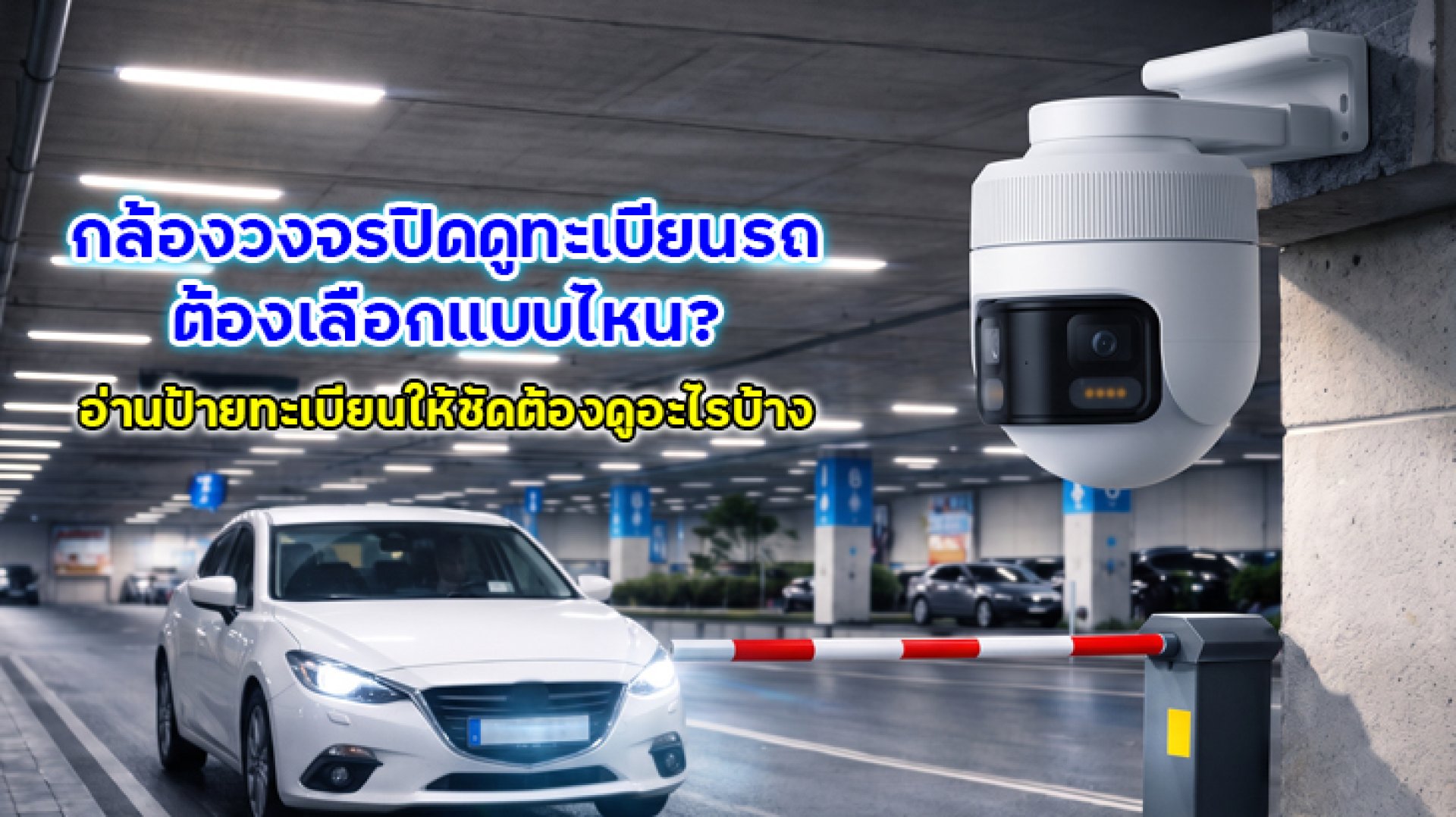
Choosing a CCTV camera to capture vehicle license plates requires more than simply buying a model with a high resolution. Even a 4K security camera may fail to capture readable plate numbers if the vehicle is moving too fast, the camera is installed at the wrong angle, or the lighting is poor.
If you want to monitor vehicles entering your home, record cars passing through a driveway, or identify vehicles in a parking area, you need to consider several factors together. These include resolution, lens focal length, installation distance, night-time performance, and shutter speed.
This guide explains how to choose a CCTV camera for license plate recognition and when a dedicated License Plate Recognition (LPR) or Automatic Number Plate Recognition (ANPR) system may be a better choice.
1. What Resolution Do You Need to Capture License Plates?
Resolution affects the amount of detail a camera can capture. However, the best resolution depends on how far away the vehicle is, how large the license plate appears in the image, and the conditions in which the camera operates.
| Camera Resolution | Typical Use Case | Important Consideration |
|---|---|---|
| 2MP (1080p) | Close-range monitoring at a gate or driveway | May provide insufficient detail when the plate is far away. |
| 4MP5MP | General vehicle monitoring with moderate detail requirements | Results depend on lens selection, distance, and lighting. |
| 8MP (4K) | Wide-area monitoring where additional image detail is useful | Higher resolution does not automatically guarantee readable plates. |
For example, a 4K camera with a wide-angle lens may capture an entire driveway clearly while showing the license plate as only a small part of the image. A lower-resolution camera with a more suitable lens and a carefully selected capture area may produce a more useful plate image.
Buying tip: Evaluate sample footage from the actual installation distance instead of choosing a camera based on megapixels alone. If automatic plate reading is the main requirement, look for a camera and software solution specifically designed for LPR or ANPR.
2. Choose the Right Lens and Focal Length
The lens determines how much of the scene appears in the image and how large distant objects look. This is particularly important when the camera must capture license plates from a fixed distance.
- Wide-angle lens: Suitable for monitoring broad areas, such as a front yard or driveway, but distant license plates may appear small.
- Longer focal length: Provides a narrower field of view and makes distant vehicles appear larger in the image.
- Optical zoom: Changes the lens magnification to bring distant subjects closer without relying solely on digital enlargement.
- Digital zoom: Enlarges part of the existing image but cannot restore details that were never captured.
If you need to monitor a gate or a particular vehicle lane, a narrower field of view may be more useful than a camera that captures a very wide area. The correct focal length depends on the distance to the vehicle and the width of the area you need to cover.
Before buying, check whether the camera has a fixed lens or an adjustable varifocal lens. An adjustable lens can make it easier to frame the intended capture area during installation.
3. Install the Camera at the Right Distance and Angle
Camera placement has a direct effect on whether license plate characters remain recognizable. A camera mounted too high or too far to the side may capture the vehicle but distort the plate's shape.
For more reliable license plate capture, consider the following:
- Keep the viewing angle as close to head-on as practical. A steep horizontal or vertical angle can make plate characters difficult to distinguish.
- Choose a suitable capture distance. The plate should occupy enough pixels in the image for the intended task.
- Focus on the expected vehicle path. If cars pass through a particular gate or lane, frame that area carefully.
- Consider vehicle speed. Faster vehicles require a suitable combination of capture distance, shutter speed, and lighting.
Axis recommends keeping the total angle between the camera and the vehicle's direction of travel below 30 degrees for license plate capture. A more direct view can improve results further, depending on the scene and camera configuration.
Reference: Axis License Plate Capture Guide
4. Night Vision: How Can You Capture Plates at Night?
Night-time recording can be more challenging than daytime monitoring. A license plate's reflective surface may become overexposed under infrared illumination, while headlights can create bright areas that obscure important details.
When comparing cameras, look beyond the phrase "night vision" and consider these factors:
- Infrared (IR) illumination: Helps illuminate the capture area in low-light conditions, but its effective range must match the installation distance.
- Exposure control: Suitable exposure settings help prevent reflective plates from appearing as bright, unreadable patches.
- Shutter speed: A sufficiently short exposure helps reduce blur when vehicles are moving.
- Headlight handling: Test the camera with vehicles approaching the camera, not just with stationary objects at night.
- Image processing: Features such as WDR can help with challenging lighting, but some WDR implementations may introduce motion artifacts. Results depend on the camera and settings.
A camera that produces bright, clear footage of a stationary driveway may still struggle to capture a moving vehicle's plate. Test sample footage in the actual lighting conditions, including headlights, streetlights, and darkness.
5. Why Shutter Speed Matters When Vehicles Are Moving
Shutter speed controls how long the image sensor collects light for each frame. If the exposure is too long while a vehicle is moving, the license plate may appear blurred.
For license plate capture, a camera needs to balance three factors:
- Vehicle speed: Faster movement generally requires a shorter exposure.
- Available light: Shorter exposures allow less light to reach the sensor, so adequate illumination becomes more important.
- Camera angle: The apparent movement of a vehicle across the image changes with the camera's position.
Frame rate alone does not guarantee sharp license plate images. A camera recording at 30 frames per second can still produce motion blur if its exposure time is too long.
For this reason, if your primary objective is to capture plates from moving vehicles, prioritize cameras that offer appropriate exposure controls or dedicated license plate capture settings.
6. Standard CCTV vs. LPR/ANPR Cameras: Which Should You Choose?
Standard CCTV cameras and specialized license plate systems serve related but different purposes. A standard CCTV camera records video for security monitoring, while an LPR/ANPR solution is designed to capture license plates and, when paired with suitable analytics, identify or read the plate characters automatically.
| Feature | Standard CCTV Camera | LPR/ANPR System |
|---|---|---|
| Main purpose | General security monitoring | License plate capture and recognition |
| Image configuration | Optimized for general scenes | May include plate-specific exposure and image settings |
| Moving vehicles | Performance varies with speed and setup | Designed for a defined vehicle capture scenario |
| Automatic plate reading | Usually requires compatible additional software | Supported when the system includes suitable recognition analytics |
| Typical applications | Homes, offices, entrances, and general surveillance | Parking access, vehicle entry systems, and traffic monitoring |
If you only need to review footage and manually identify a vehicle after an incident, a well-positioned standard CCTV camera may be sufficient. If you need automatic plate reading, vehicle access control, or reliable identification across repeated vehicle movements, consider a complete LPR/ANPR solution.
Keep in mind that purchasing an LPR-capable camera does not always mean that automatic recognition software is included. Confirm the camera, software, compatibility, and licensing requirements before buying.
Reference: Axis License Plate Recognition
7. Checklist Before Buying a CCTV Camera for License Plate Capture
Use this checklist to compare camera models before making a purchase.
- Does the resolution provide sufficient detail at the actual capture distance?
- Is the lens suitable for the width of the entrance or vehicle lane?
- Can the camera be installed at an angle that keeps the license plate readable?
- Does the night-vision system provide adequate illumination for the capture area?
- Can the camera use suitable shutter speed and exposure settings for moving vehicles?
- Have you checked footage with headlights, low light, and the expected vehicle speed?
- Do you need to review recorded footage manually, or do you require automatic LPR/ANPR recognition?
- If automatic recognition is required, are the camera, software, and recording system compatible?
Whenever possible, request a demonstration or sample recording from a similar installation. Testing at the expected distance and in realistic lighting conditions is more reliable than relying on specifications alone.
Conclusion: What Is the Best CCTV Camera for Reading License Plates?
The best CCTV camera for license plate capture is not necessarily the model with the highest resolution. Lens focal length, camera placement, viewing angle, shutter speed, and night-time illumination all influence whether the plate is readable.
For home entrances and low-speed driveways, a suitably positioned standard CCTV camera may meet your needs if you only need to review footage. For automatic plate reading or more demanding vehicle monitoring, a dedicated LPR/ANPR solution is generally the more appropriate option.
Before choosing a model, define the distance, vehicle speed, lighting conditions, and whether you need manual review or automatic recognition. These requirements will help you select a system that fits the actual job rather than paying for specifications that may not improve plate readability.
Frequently Asked Questions (FAQ)
1. Is a 4K CCTV camera good enough to read license plates?
Not always. A 4K camera provides more image detail, but plate readability also depends on the lens, distance, viewing angle, lighting, and vehicle speed. Test footage from the intended installation position before making a decision.
2. What is the difference between an LPR camera and a normal CCTV camera?
A standard CCTV camera is designed primarily for general surveillance. An LPR camera or system is configured for license plate capture and may work with analytics software to read plate characters automatically.
3. Can a CCTV camera capture license plates at night?
Yes, if the camera and installation provide suitable illumination and exposure settings. However, infrared reflections, headlights, and motion blur can still make plates unreadable, so test the system in real night-time conditions.
4. Is optical zoom better than digital zoom for license plate capture?
Optical zoom changes the lens magnification and can capture more useful detail from a distant subject. Digital zoom enlarges the image but cannot recover detail that was not captured by the sensor.
5. Can a standard CCTV camera automatically recognize license plates?
Usually, automatic recognition requires compatible LPR/ANPR analytics. Some camera systems include this capability, while others need additional software or a compatible recording and processing system.