Infrared (IR) vs Full Color Night Vision Cameras: Key Differences & Which One to Choose in 2026
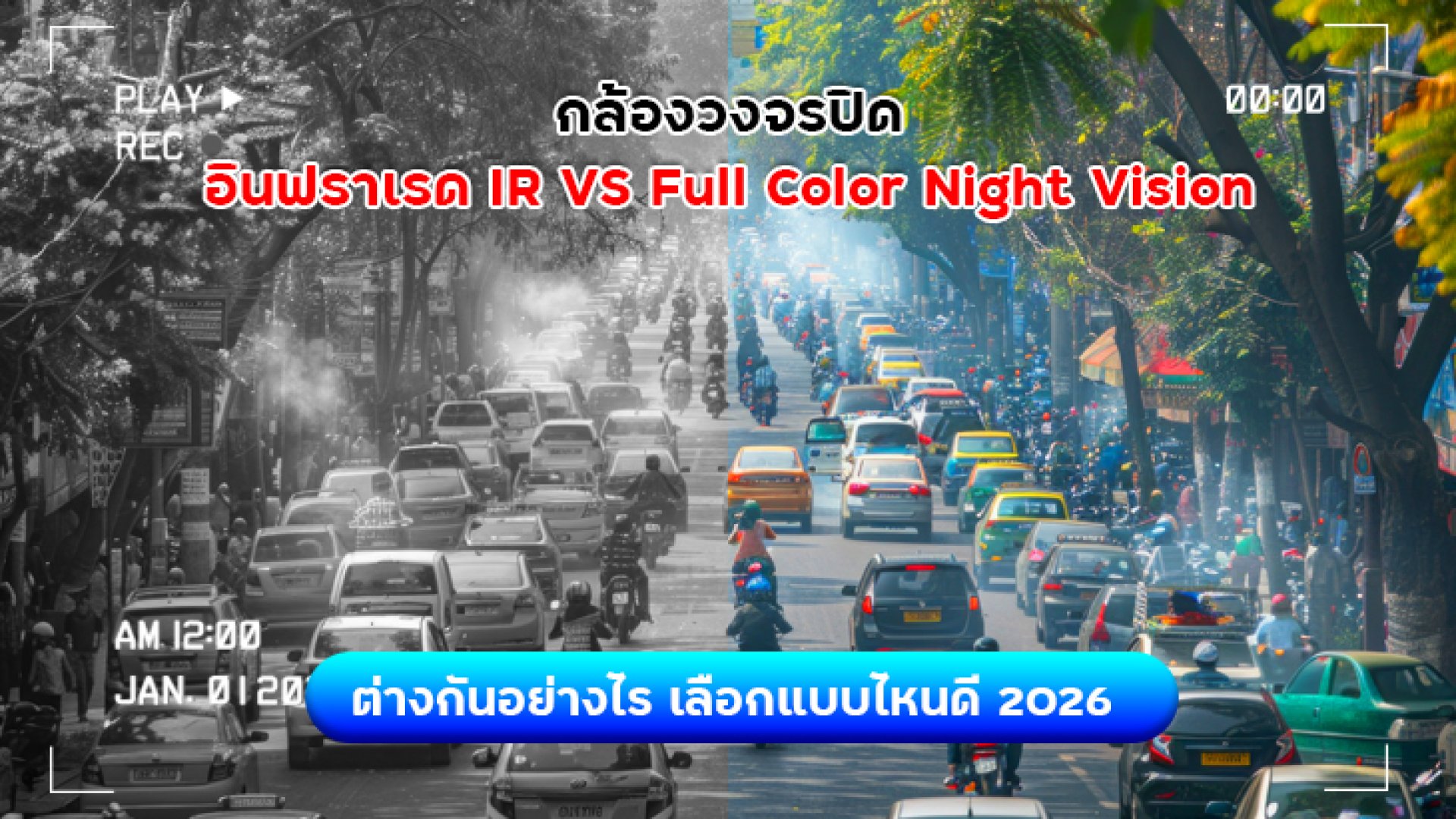
Infrared (IR) vs Full Color Night Vision Cameras: Whats the Difference and Which One Should You Choose in 2026?
When choosing a modern CCTV system, night vision performance has become one of the most important factors. Most security incidents happen in low-light or completely dark environments, making night vision technology essential for effective surveillance.
The two main technologies used today are Infrared (IR) Night Vision and Full Color Night Vision. While both are designed to improve visibility at night, they deliver very different image quality and usability.
How Do Security Cameras See at Night?
CCTV cameras use image sensors combined with low-light enhancement technologies. The two main approaches are:
- Infrared (IR Night Vision) uses invisible infrared light to capture images in darkness
- Full Color Night Vision uses high-sensitivity sensors and supplemental lighting to maintain color images at night
These differences significantly affect how clear the recorded footage is, especially when identifying faces, clothing colors, or vehicles.
What is Infrared (IR) Night Vision?
Infrared Night Vision uses infrared LEDs to illuminate the environment. The human eye cannot see this light, but the camera sensor can detect it. As a result, footage is recorded in black and white when there is not enough light.
Advantages of IR Night Vision
- Works in complete darkness
- Stable and reliable performance
- Lower power consumption
- More affordable camera options
Limitations of IR Night Vision
- No color information (black & white only)
- Harder to identify clothing or vehicle color
- Details may be less useful for evidence
What is Full Color Night Vision?
Full Color Night Vision is designed to capture color images even in low-light conditions. It uses a highly sensitive sensor combined with built-in LED lighting to enhance visibility without switching to black-and-white mode.
Advantages of Full Color Night Vision
- Captures real color images at night
- Better for identifying people and vehicles
- More realistic and detailed footage
- Stronger evidence quality for security use
Limitations of Full Color Night Vision
- Requires some ambient light or built-in illumination
- Slightly higher cost
- May consume more power than IR systems
IR vs Full Color Night Vision Comparison Table
| Feature | IR Night Vision | Full Color Night Vision |
|---|---|---|
| Night Image | Black & White | Full Color |
| Performance in Total Darkness | Excellent | Good (depends on light) |
| Facial Recognition | Moderate | High |
| Color Identification | No | Yes |
| Evidence Quality | Moderate | High |
| Price | Lower | Higher |
Which One Should You Choose in 2026?
Residential Homes (Urban Areas)
Recommended: Full Color Night Vision
Urban environments usually have some ambient light, making full-color footage more useful for identifying intruders and vehicles.
Retail Stores & Parking Areas
Recommended: Full Color Night Vision
Color detail helps identify clothing, faces, and license plates more accurately.
Rural or Completely Dark Areas
Recommended: IR Night Vision
Best for environments with zero lighting where stability is more important than color.
Balanced Cost & Performance
Recommended: Hybrid Cameras (IR + Full Color)
Automatically switches between modes depending on lighting conditions.
What is a Hybrid Night Vision System?
Modern CCTV systems often combine both IR and Full Color technologies. These hybrid systems automatically:
- Use Full Color in low-light environments
- Switch to IR in complete darkness
This provides the most flexible and efficient security coverage in all conditions.
Conclusion
Infrared (IR) cameras are best for complete darkness and stable performance, while Full Color Night Vision provides significantly better detail and identification capability.
In 2026, Full Color or Hybrid systems are generally the preferred choice for most residential and commercial applications due to their improved evidence quality and real-world usability.