How to Choose a CCTV Power Adapter Check Voltage, Amps, and Connector Size Before Buying
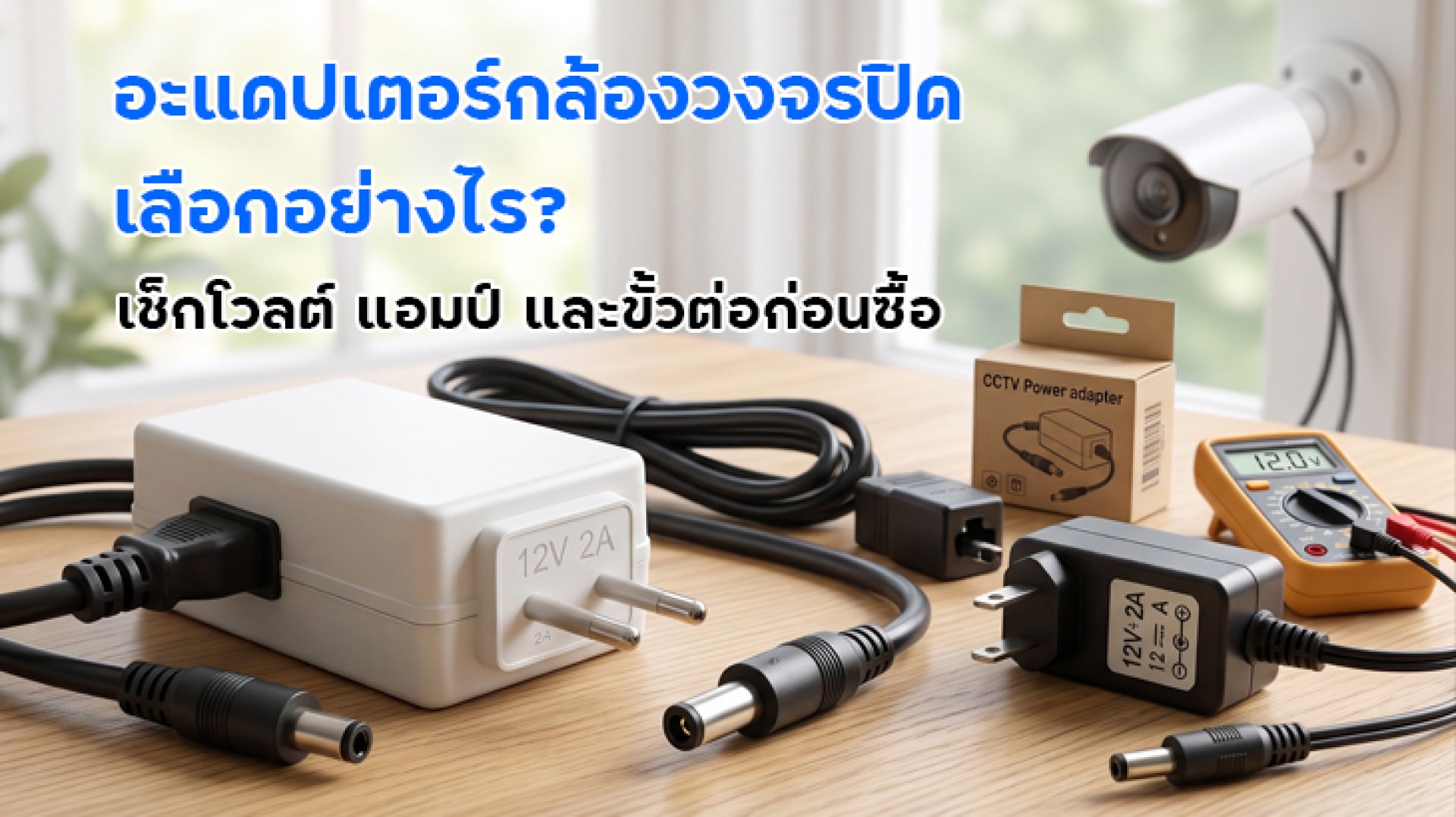
Choosing the right CCTV power adapter is more important than simply finding one that fits your camera's power socket. Even if the connector looks identical, an adapter with the wrong voltage, insufficient current, or reversed polarity may cause your camera to malfunction or potentially become damaged.
Before buying a replacement CCTV power adapter, you should check three essential specifications: voltage (V), current (A), and connector compatibility. This guide explains what each specification means, how to calculate wattage, and how to choose a suitable adapter for your CCTV camera.
What Is a CCTV Power Adapter?
A CCTV power adapter is a device that converts AC electricity from a wall outlet into DC power that a security camera can use. Most electronic CCTV cameras require a stable DC power supply, but the exact voltage and current requirements depend on the camera model.
Common adapter specifications include:
- Input: The AC voltage accepted from the electrical outlet, such as 100240V AC.
- Output: The DC voltage supplied to the camera, such as 5V, 12V, or 24V DC.
- Current: The maximum current the adapter can provide, measured in amperes (A).
- Connector: The physical plug that connects the adapter to the camera.
For example, an adapter labeled 12V 2A provides a 12-volt DC output and can supply up to 2 amperes of current. However, never assume that every CCTV camera uses a 12V adapter. Always check the specifications printed on the original adapter, camera label, or product manual.
How to Choose a CCTV Power Adapter: 3 Specifications to Check
1. Voltage (V): The Output Voltage Must Match
Voltage is the first specification to check when selecting a CCTV power adapter. The adapter's output voltage must match the voltage required by the camera.
For example:
- A camera requiring 12V DC should use a compatible 12V DC adapter.
- A camera requiring 5V DC should use a compatible 5V DC adapter.
- A camera requiring 24V DC needs a suitable 24V DC power supply.
Using an adapter with a voltage that is too high may damage the camera's internal components. If the voltage is too low, the camera may fail to start, restart repeatedly, or operate unstably.
Important: Do not choose an adapter based only on its connector size. Matching the voltage is essential for safe operation.
2. Current (A): Choose an Adapter with Sufficient Amperage
Current, measured in amperes (A), indicates how much electrical current an adapter can supply. Unlike voltage, the adapter's current capacity can be equal to or higher than the camera's required current.
For example, if your CCTV camera requires 12V 1A:
- 12V 1A adapter: Meets the stated current requirement.
- 12V 2A adapter: Can provide sufficient current capacity.
- 12V 3A adapter: Can also provide sufficient current capacity, provided all other specifications match.
Using an adapter with a higher amp rating does not automatically force extra current into the camera. The camera draws the current it needs under normal operating conditions, while the adapter's rating indicates its maximum supply capacity.
However, using an adapter with insufficient current capacity can cause unstable operation, unexpected shutdowns, or repeated restarts, especially when the camera's infrared night vision or other power-consuming features are active.
3. Connector Size and DC Polarity
Even if the voltage and current specifications are correct, the CCTV power adapter must have a compatible connector.
Many CCTV cameras use a round DC barrel connector, but connector dimensions can vary. You should check:
- Outer diameter: The width of the connector's outer section.
- Inner diameter: The size of the opening in the connector.
- Polarity: Whether the center contact is positive or negative.
- Connector type: Whether the camera uses a barrel plug or another power connector.
Some adapters use a center-positive configuration, while others may have different polarity. Connecting an adapter with incompatible polarity can damage the camera.
Therefore, check the original adapter's polarity symbol or the camera manufacturer's specifications before purchasing a replacement.
How Many Watts Does a CCTV Power Adapter Need?
Wattage (W) represents electrical power. You can calculate an adapter's output wattage by multiplying voltage (V) by current (A).
Formula: Wattage (W) = Voltage (V) × Current (A)
For example, common 12V adapter ratings provide the following output power:
| Adapter Specification | Calculation | Output Power |
|---|---|---|
| 12V 1A | 12 × 1 | 12W |
| 12V 2A | 12 × 2 | 24W |
| 12V 3A | 12 × 3 | 36W |
This calculation helps you understand the adapter's maximum output capacity. However, choosing an adapter based on wattage alone is not enough. You must still match the required voltage, current capacity, polarity, and connector.
Can You Use a 12V 2A Adapter Instead of a 12V 1A Adapter?
Yes, in general, you can use a 12V 2A adapter instead of a 12V 1A adapter if the CCTV camera requires 12V DC and the replacement adapter has compatible polarity, connector dimensions, and power quality.
The difference is that the 12V 2A adapter can supply up to 2 amperes, while the 12V 1A adapter can supply up to 1 ampere. The camera does not automatically receive 2 amperes just because the adapter has that rating.
However, you should avoid using an adapter with a different output voltage or incompatible polarity, even if its wattage is higher.
Signs That Your CCTV Power Adapter May Be Failing
A faulty CCTV power adapter can cause symptoms that look similar to camera or network problems. If your camera behaves unusually, check its power supply before replacing the entire device.
1. The Camera Keeps Restarting
If the camera repeatedly turns on and off, the adapter may not be supplying stable power. This can happen when the adapter is damaged or its current capacity is insufficient.
2. The Camera Turns Off at Night
Some cameras consume more power when infrared night vision activates. If the adapter cannot supply enough current, the camera may restart or shut down when switching to night mode.
3. The Camera Has No Power
If the camera does not turn on, check the wall outlet, power cable, adapter indicator (if available), and DC connector. A damaged adapter is one possible cause, but the camera itself may also have a hardware problem.
4. The Adapter Becomes Unusually Hot
Some warmth during operation is normal. However, excessive heat, a burning smell, unusual buzzing, or visible damage may indicate a faulty adapter. Disconnect it from the power outlet and stop using it if you notice these warning signs.
Checklist Before Buying a Replacement CCTV Power Adapter
Before ordering a new CCTV power adapter, use this checklist to reduce the risk of choosing an incompatible product.
- Check the camera's required output voltage (V).
- Choose an adapter with a current rating (A) equal to or higher than the camera's requirement.
- Confirm that the output is AC or DC as specified by the camera.
- Check the DC connector's outer and inner dimensions.
- Verify the correct positive and negative polarity.
- Choose a reputable adapter with appropriate electrical safety certifications.
- Check the adapter's input voltage range to ensure compatibility with your electrical supply.
If you are unsure, refer to the camera's user manual or contact the manufacturer or seller with the camera model number. This is safer than guessing based on the appearance of the original adapter.
Frequently Asked Questions About CCTV Power Adapters
Can I use a higher-amp adapter for my CCTV camera?
Yes, provided the output voltage, DC polarity, connector, and other electrical specifications are compatible. A higher amp rating indicates greater available current capacity, not that the camera will automatically receive more current.
Can I use a 12V 3A adapter instead of a 12V 2A adapter?
Generally, yes, if the camera requires 12V DC and the replacement adapter has compatible polarity and connector dimensions. The camera will draw the current it needs.
What happens if I use an adapter with the wrong voltage?
An adapter with too high a voltage may damage the camera. An adapter with too low a voltage may cause the camera to malfunction, restart, or fail to turn on.
Why does my CCTV camera keep restarting?
Possible causes include an unstable power supply, a damaged adapter, insufficient current capacity, a faulty cable, or a problem with the camera itself. Check the power specifications and connections before replacing the camera.
Do all CCTV cameras use a 12V adapter?
No. Different camera models may require 5V, 12V, 24V, or other power specifications. Always check the manufacturer's stated requirements before buying an adapter.
Conclusion: Choose a CCTV Power Adapter That Matches Your Camera
Choosing the right CCTV power adapter is not simply about finding a plug that fits. You need to check the output voltage, current capacity, DC polarity, and connector size to ensure reliable and safe operation.
Remember these key points: voltage must match the camera's requirements, current capacity must be sufficient, and the connector and polarity must be compatible. If you are replacing an adapter, checking the original specifications or camera manual first can help prevent unnecessary damage and expenses.