What Is PTZ? A Complete Guide to PTZ Security Cameras, Features, Benefits, and Buying Tips (2026)
If you're shopping for a security camera, you've probably come across the term PTZ Camera. But what is PTZ, and how is it different from a standard CCTV camera? Is it worth the investment?
In this guide, you'll learn everything you need to know about PTZ cameras, including how they work, their key features, advantages, disadvantages, ideal installation locations, and practical tips for choosing the right PTZ camera for your home or business.
What Is PTZ?
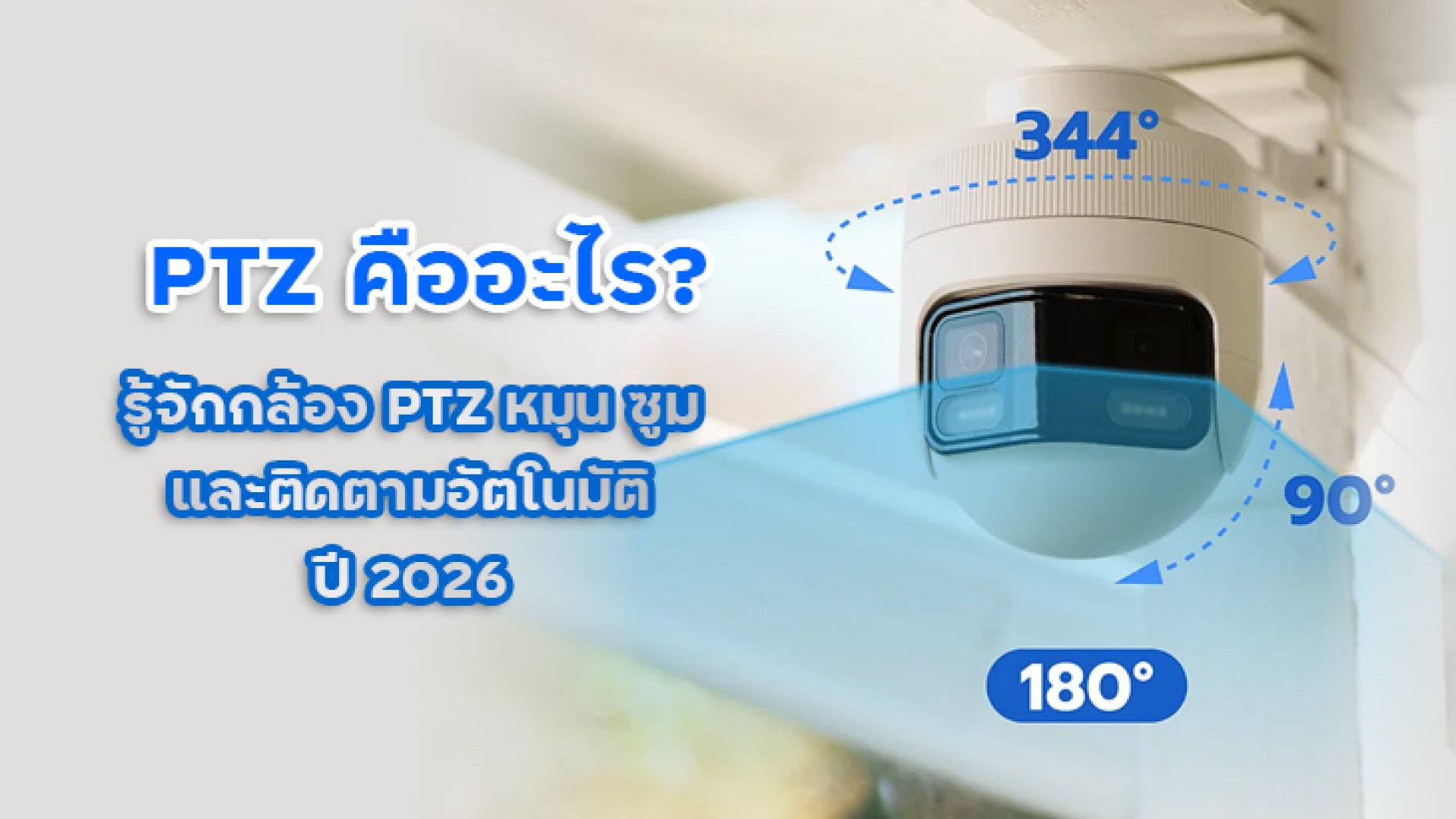
PTZ stands for Pan, Tilt, and Zoom. It refers to a type of surveillance camera that can remotely rotate horizontally, tilt vertically, and zoom in or out on a subject.
Unlike fixed security cameras, PTZ cameras allow users to actively monitor large areas from a smartphone, computer, or Network Video Recorder (NVR).
- Pan Rotates left and right.
- Tilt Moves up and down.
- Zoom Magnifies distant objects for a closer view.
Because of these capabilities, a single PTZ camera can cover a much larger area than a traditional fixed camera, making it ideal for locations that require flexible surveillance.
How Does a PTZ Camera Work?
A PTZ camera contains built-in motors that control horizontal and vertical movement, along with a zoom lens that adjusts the focal length without physically moving the camera.
Modern PTZ cameras can be controlled manually or configured to operate automatically through intelligent features such as:
- Automatic patrol routes
- Preset viewing positions
- Auto Tracking for people and vehicles
- Motion-triggered zoom
- AI-powered object detection
Key Features of PTZ Cameras
360° Pan Movement
Many PTZ cameras can rotate nearly or fully 360 degrees, allowing wide-area surveillance with minimal blind spots.
Vertical Tilt Control
The camera can tilt upward and downward to monitor areas at different elevations, making it ideal for high-mounted installations.
Optical Zoom
Unlike digital zoom, Optical Zoom uses the camera's lens to enlarge distant objects while maintaining image quality.
Auto Tracking
AI-powered PTZ cameras can automatically detect and follow moving people or vehicles, ensuring important events remain within the camera's field of view.
Preset Positions
Users can save frequently monitored locations such as entrances, parking areas, or warehouse doors for one-touch access.
PTZ Camera vs Fixed Security Camera
| Feature | PTZ Camera | Fixed Camera |
|---|---|---|
| Pan (Left & Right) | ✔ | ✘ |
| Tilt (Up & Down) | ✔ | ✘ |
| Optical Zoom | ✔ | Some Models |
| Auto Tracking | ✔ | Some Models |
| Wide Area Coverage | ✔ | ✘ |
| Lower Cost | ✘ | ✔ |
Optical Zoom vs Digital Zoom
Optical Zoom enlarges an image using the camera's physical lens, preserving sharpness and detail. It is ideal for identifying faces, license plates, or distant objects.
Digital Zoom enlarges the image using software, which may reduce image quality as zoom levels increase.
For large outdoor areas such as parking lots, factories, or warehouses, a PTZ camera with Optical Zoom is highly recommended.
Where Are PTZ Cameras Best Used?
Homes
Monitor driveways, gardens, garages, and outdoor areas with one flexible camera.
Retail Stores
View entrances, checkout counters, aisles, and storage rooms from a single device.
Warehouses
Cover large storage areas while reducing the number of cameras required.
Factories
Monitor production lines, machinery, and employee safety in real time.
Parking Lots
Zoom in on license plates and track vehicle movement across wide open spaces.
Advantages of PTZ Cameras
- Wide surveillance coverage
- Remote pan, tilt, and zoom control
- Supports AI-powered Auto Tracking
- Reduces the number of cameras needed
- Ideal for large properties
- Supports Patrol Mode and Preset Positions
Disadvantages of PTZ Cameras
- Higher purchase cost than fixed cameras
- Requires proper configuration for optimal performance
- While focusing in one direction, events outside the current view may not be recorded
- Moving components may require additional maintenance over time
How to Choose the Right PTZ Camera
- Choose at least 2K or 4K video resolution.
- Select an appropriate Optical Zoom level based on surveillance distance.
- Look for AI Detection and Auto Tracking features.
- Ensure mobile app support for remote monitoring.
- Choose IP66 or IP67 weatherproof ratings for outdoor installation.
- Support for MicroSD, NVR, or Cloud recording is recommended.
Conclusion
A PTZ camera is a smart surveillance solution capable of panning, tilting, and zooming remotely, making it perfect for monitoring large areas efficiently. Whether you need security for a home, retail store, warehouse, factory, or parking lot, PTZ cameras provide greater flexibility than traditional fixed cameras. Models equipped with AI features such as Auto Tracking further improve security by automatically following people and vehicles, reducing blind spots and enhancing overall surveillance effectiveness.
Frequently Asked Questions (FAQ)
What does PTZ stand for?
PTZ stands for Pan, Tilt, and Zoom, referring to a camera's ability to rotate, tilt, and zoom remotely.
Can I control a PTZ camera from my smartphone?
Yes. Most modern PTZ cameras include mobile apps that allow users to view live video, control movement, and adjust zoom remotely.
Is a PTZ camera better than a fixed camera?
PTZ cameras are better for monitoring large or dynamic areas, while fixed cameras are typically more affordable and suitable for monitoring a single location continuously.
Do all PTZ cameras support Auto Tracking?
No. Auto Tracking is available only on compatible models, so it's important to check the product specifications before purchasing.
Can PTZ cameras be installed outdoors?
Yes. Outdoor PTZ cameras with IP66 or IP67 weatherproof ratings are designed to withstand rain, dust, and various environmental conditions.