CCTV Motion Recording vs 24/7 Recording: What Is the Difference?
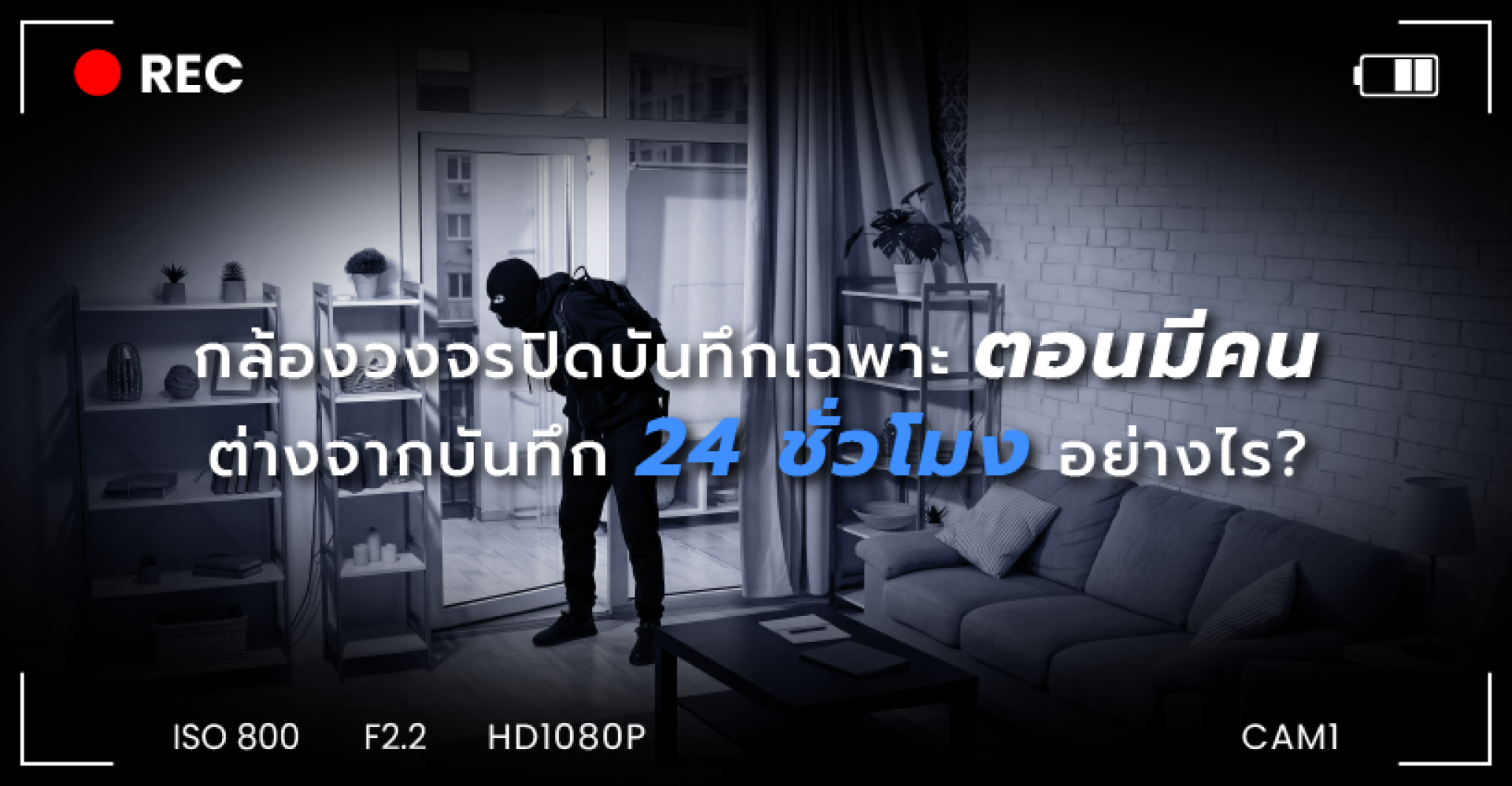
When buying a CCTV camera, many people focus mainly on resolution such as 2K, 3K, or 4K, as well as AI features. However, another important question is often overlooked: When should the CCTV camera record?
Modern CCTV cameras can usually be configured to record continuously 24 hours a day or record only when motion or a specific event is detected. These two recording methods have different advantages and limitations, especially when it comes to storage capacity, searching recorded footage, and reducing the risk of missing important events.
So which recording mode is better for a home, store, office, or outdoor area? This article compares both methods and explains how to choose the right CCTV recording mode for your actual usage.
What Is 24/7 Continuous CCTV Recording?
Continuous Recording means that the CCTV camera records video continuously during the configured recording period without waiting for motion or an event to occur.
For example, if continuous recording is configured from 12:00 AM to 12:00 AM, the camera will record throughout the entire 24-hour period, even when there is no one moving in front of the camera.
The biggest advantage is that continuous footage is available throughout the recording period. This makes it suitable for areas where you want to review everything that happened, including events that may not have triggered a motion detection system.
However, continuous recording generally requires more storage space than event-based recording. According to AXIS Camera Station documentation, continuous recording requires more storage capacity than some other recording methods, while motion detection can help reduce storage requirements.
What Is CCTV Motion or Event Recording?
Motion or event recording means that the CCTV camera is configured to start recording when motion or a specific event that meets predefined conditions is detected.
It is important to understand that Motion Detection does not necessarily mean Human Detection. A basic motion detection system may detect movement caused by people, vehicles, animals, leaves, or other moving objects, depending on the camera and its settings.
Cameras with AI capabilities may provide more advanced detection, such as Human Detection or Vehicle Detection. The exact capabilities depend on the camera model and its software.
Some recording systems can also include footage from before and after the detected event. These functions are commonly referred to as Pre-buffer and Post-buffer, helping ensure that the recording does not begin only after the important event has already happened.
For example, AXIS systems can configure Pre-buffer and Post-buffer for Motion Detection recording, while some Hanwha Vision systems support event recording with configurable periods before and after an event.
CCTV Motion Recording vs 24/7 Recording: What Is the Difference?
| Feature | 24/7 Continuous Recording | Motion/Event Recording |
|---|---|---|
| Recording method | Records continuously | Records when conditions are met |
| Storage usage | Generally higher | Generally lower |
| Searching recorded footage | May require more Timeline searching | Events are easier to identify |
| Continuous footage | Yes | Depends on detection and settings |
| Best suited for | Areas requiring complete recording | Homes and areas where storage efficiency is important |
Advantages of 24/7 Continuous CCTV Recording
1. Continuous footage is available
The biggest advantage is that the camera does not need to detect motion before recording. If something happens, footage from that period is already available, allowing you to review the events before and after an incident.
2. Suitable for areas with frequent activity
Continuous recording can be useful for stores, warehouses, building entrances, parking areas, or other locations where people and vehicles move frequently throughout the day.
In these environments, continuous recording can make it easier to review the complete Timeline instead of relying entirely on individual detection events.
3. Less dependent on motion detection
If motion detection is incorrectly configured, the system may generate too many alerts or fail to detect certain events. Continuous recording provides a straightforward solution for areas where every moment needs to be recorded.
Limitations of 24/7 Continuous Recording
Higher storage consumption
The biggest limitation is storage usage. The higher the camera resolution and Bitrate, the more storage space the recorded video may require.
Actual recording time does not depend on resolution alone. Other factors such as Bitrate, Codec, Frame Rate, and recording mode also affect how much storage is required.
If you want to calculate how long 32GB, 64GB, 128GB, or 256GB of storage can record CCTV footage, see our related article about how many days a CCTV camera can record, which covers storage capacity, H.265, Motion Detection, and other important factors.
Advantages of CCTV Motion or Event Recording
1. Uses less storage
When the camera does not need to record every second of the day, less storage is generally required compared with continuous recording under the same conditions.
AXIS documentation explains that recording only when Motion Detection occurs can significantly reduce storage requirements compared with Continuous Recording.
2. Easier to find important events
Instead of scrolling through hours of footage containing no activity, users can focus on periods where the system detected motion or another defined event.
This can make reviewing recorded footage considerably more convenient, especially when a camera has been recording for several days.
3. Suitable for homes with limited activity
For a typical home where there may be long periods without movement in front of the camera, event-based recording can make more efficient use of available storage.
Limitations of Motion Recording
The most important point to understand is that Motion Detection is not the same as Human Detection.
A basic Motion Detection system may detect movement from people, vehicles, animals, trees, leaves, or other objects, depending on the camera and its settings.
On the other hand, a CCTV camera equipped with AI Human Detection or Object Detection may be able to filter events more precisely. However, the actual detection capabilities vary by camera model and software.
Incorrect sensitivity or detection-area settings may also result in false alarms or cause some events to be missed.
How Does an Activity Zone Help Reduce Unnecessary Recording?
Many modern CCTV cameras allow users to define an Activity Zone or Motion Detection Area. This tells the camera which part of the image should be monitored for movement.
For example, if a CCTV camera is installed in front of a house and a tree is visible in the camera's field of view, wind moving the leaves may trigger unnecessary motion events.
By defining the area around the entrance or gate as the detection zone, unnecessary events caused by other parts of the scene can potentially be reduced.
AXIS systems support configurable Include and Exclude areas for Motion Detection, while some systems also provide additional filtering options. The exact features depend on the camera and recording system.
Should You Use Human Detection If Your CCTV Has AI?
If your CCTV camera supports AI Human Detection, using person detection can provide more precise event filtering than basic Motion Detection in situations where your primary concern is people entering a monitored area.
For example, if you want the camera to record or alert you when a person enters a specific area, combining Human Detection with an Activity Zone can help reduce unnecessary events caused by other types of movement.
However, AI detection should not be considered 100% accurate in every environment. Performance can depend on the camera model, installation position, lighting conditions, viewing angle, and system configuration.
Which CCTV Recording Mode Should You Choose?
| Use Case | Recommended Recording Mode |
|---|---|
| Typical home | Motion / Event Recording |
| Front door | Motion + Human Detection if supported |
| Retail store | Continuous or Continuous + Event |
| Warehouse | Continuous + Event |
| Parking area | Continuous or Event depending on the importance of the area |
| Areas requiring complete footage | Continuous Recording |
Which Recording Mode Uses Less Storage?
In general, Motion or Event Recording uses less storage than 24/7 Continuous Recording because the camera does not continuously record periods when there is no relevant activity.
However, it is not possible to give a fixed number for how many times less storage will be used. The actual difference depends on how much movement occurs in front of the camera, as well as the selected resolution, Bitrate, Codec, and other recording settings.
If people, vehicles, or other objects are constantly moving through the camera's field of view, the amount of recorded footage may increase significantly and the storage advantage of Motion Recording may become smaller.
Can Motion Recording Replace 24/7 Recording?
For many homes, Motion or Event Recording can be a practical alternative to continuous recording. However, it should not automatically be considered a complete replacement.
If the purpose of the CCTV system is to maintain a complete record of everything that happens in an important area, Continuous Recording may still be the better choice.
For example, a business may want to review what happened during a specific period even if the event did not trigger a motion detection rule. In this situation, continuous footage can provide additional context.
For a home entrance, however, recording based on Motion Detection or Human Detection may be sufficient, especially when storage capacity is limited.
A Hybrid Recording Strategy Can Be the Best Option
Some CCTV systems allow users to combine different recording strategies. For example, a system may continuously record important areas while using event-based recording for less critical areas.
Another approach is to use Continuous Recording together with AI Event Detection. This allows the system to retain continuous footage while making important events easier to find.
The best configuration therefore depends on the importance of the monitored area, available storage, camera capabilities, and how long you need to keep recorded footage.
Conclusion: Motion Detection or 24/7 Recording?
There is no single recording mode that is best for every CCTV installation. The right choice depends on the importance of the area, storage capacity, and the type of events you want to monitor.
If your priority is saving storage space and making important events easier to find, Motion or Event Recording is a practical choice.
If your priority is maintaining complete footage throughout the day and you do not want to rely entirely on motion detection, 24/7 Continuous Recording is more appropriate, although you will need sufficient storage capacity.
For a typical home, Motion Detection or Human Detection combined with an Activity Zone can be a good starting point. For important areas such as stores, warehouses, or locations where complete historical footage is required, Continuous Recording or a hybrid recording strategy may be more appropriate.
Before choosing a recording mode, also check the camera's supported storage capacity, Codec, Bitrate, recording options, AI detection features, and whether the camera supports Pre-buffer or Post-buffer recording. These details can have a significant impact on how the CCTV system performs in real-world use.
External References