Solar Camera vs Plug-In CCTV Which Is Better for Your Home?
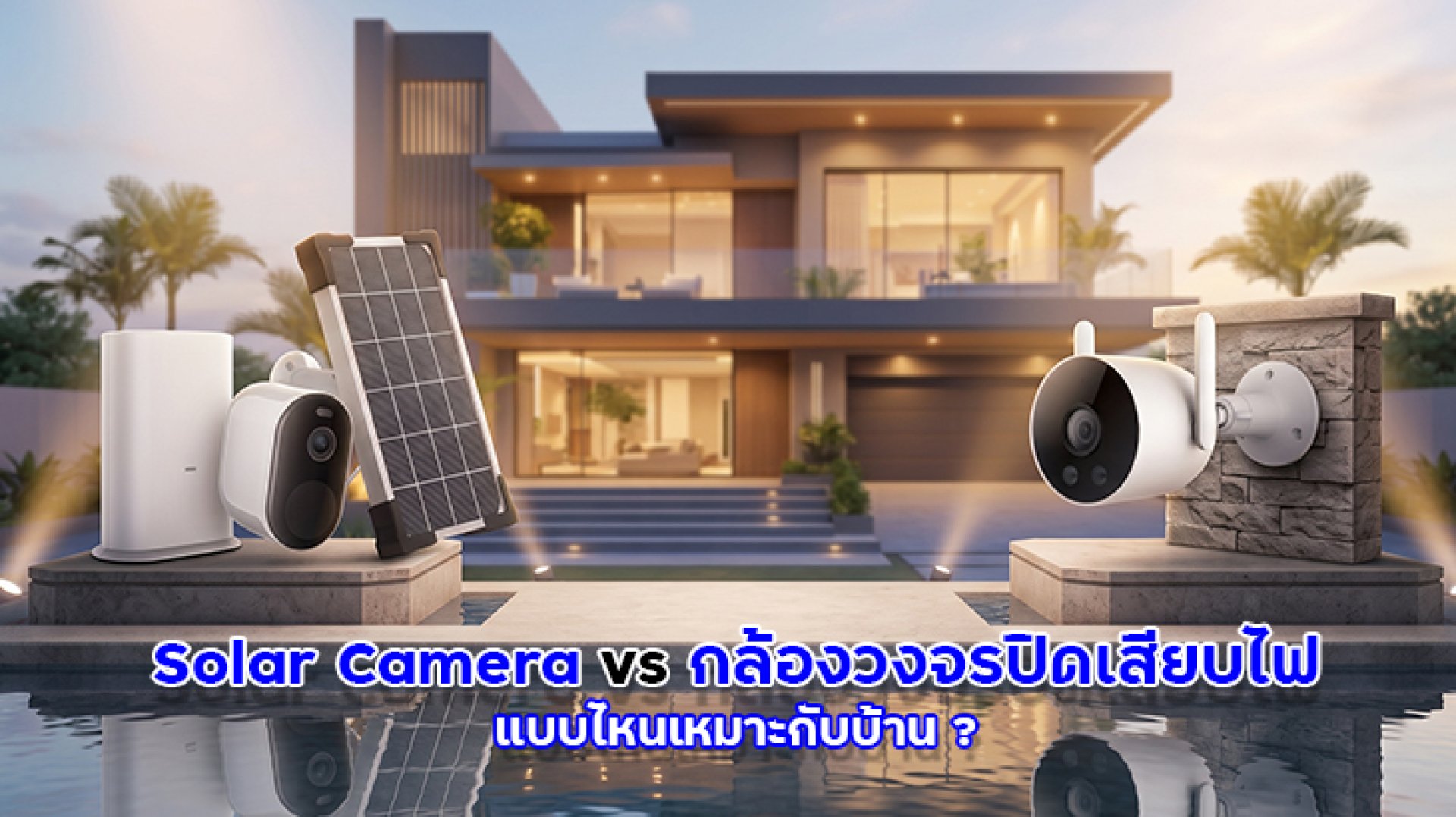
Planning to install a CCTV camera around your home but not sure which type to choose? Some areas may not have a nearby power outlet, while running power cables can be difficult or expensive. On the other hand, you may wonder whether a Solar Camera can generate enough power for everyday use.
Solar Cameras and plug-in CCTV cameras are designed for different installation conditions. Neither option is automatically better for every home.
The right choice depends on where you want to install the camera, whether power is available, how much sunlight the location receives, and how continuously you need the camera to operate.
What Is a Solar Camera?
A Solar Camera is a security camera that uses a rechargeable battery as its main power source and a solar panel to help recharge the battery. Depending on the model, the solar panel may be built into the camera or installed separately.
The main advantage is that you do not need to run a traditional power cable from a nearby outlet to the camera. This makes Solar Cameras useful for outdoor areas where access to electricity is limited.
However, a Solar Camera does not mean the camera operates without electricity. It still relies on battery power, while the solar panel replenishes that battery. Actual charging performance depends on the model, sunlight, weather, installation position, and usage.
Consumer Reports notes that battery-powered security cameras generally offer more flexibility in installation than wired models, while solar panels can help reduce how frequently the camera battery needs to be recharged. Source: Consumer Reports
What Is a Plug-In CCTV Camera?
A plug-in CCTV camera receives power directly from an AC adapter or another electrical power source. Unlike a battery-powered camera, it does not primarily depend on a rechargeable battery to keep operating.
One major advantage is that the camera can continue operating as long as the power supply is available and suitable for the camera.
The trade-off is that you need a suitable power outlet near the installation point or need to plan for power cable installation.
Solar Camera vs Plug-In CCTV: What Is the Difference?
| Feature | Solar Camera | Plug-In CCTV |
|---|---|---|
| Power source | Rechargeable battery + solar energy | AC adapter or electrical power |
| Power cable | Little or no traditional power cabling required | Requires a power connection |
| Installation flexibility | High, especially where power is unavailable | Depends on access to electrical power |
| Sunlight | Requires suitable sunlight for solar charging | Does not depend on sunlight |
| Battery charging | Solar panel helps recharge the battery | No camera battery charging required when powered continuously |
| Areas without electricity | More suitable | Requires additional power planning |
| Continuous operation | Depends on battery capacity, solar charging, and usage | Suitable when continuous power is available |
Advantages of a Solar Camera
1. Easier Installation Where There Is No Power Outlet
This is one of the biggest advantages of a Solar Camera. You do not need to run a long power cable from the house to the camera in the same way you would with a traditional plug-in camera.
This can be useful for areas such as gates, gardens, detached garages, driveways, or outdoor areas where installing a new electrical outlet would be inconvenient.
2. Less Complicated Power Installation
When there is no need to run a traditional power cable, installation can be more flexible, especially for homes that are already completed and where adding new electrical wiring would require additional work.
However, the camera still needs to be positioned so that its solar panel can receive sufficient sunlight.
3. Useful for Remote Outdoor Locations
If the location is far from the house, a Solar Camera can significantly reduce the difficulty of installing a power connection.
This makes solar-powered cameras particularly useful for large properties, gates, gardens, and outdoor areas that are not close to existing electrical outlets.
Limitations of Solar Cameras You Should Know
1. Not Every Location Is Suitable for Solar Charging
A Solar Camera needs sufficient energy to keep its battery charged. If the solar panel is shaded for most of the day, its charging performance may be reduced.
For example, locations under a deep roof overhang, beneath large trees, or on walls that receive very little sunlight may not be ideal for solar charging.
Some manufacturers recommend carefully considering the position and angle of the solar panel. Certain systems can also use larger batteries or backup power to help the camera continue operating when sunlight is insufficient. Example: Reolink Solar Panel information
2. Heavy Usage Can Consume More Power
Do not assume that a Solar Camera will never need additional charging simply because it has a solar panel.
Power consumption depends on the camera design and how it is used. Frequent motion detection, repeated Live View sessions, or power-intensive features can consume more energy.
Arlo notes that heavy camera usage can cause the battery to drain faster than the solar panel can replenish it. This means solar charging should not be treated as an unlimited power source. Source: Arlo
Advantages of Plug-In CCTV Cameras
1. No Need to Depend on Sunlight
Plug-in CCTV cameras receive power from an electrical source, so they do not depend on sunlight for their primary power supply.
This makes them easier to install in locations with roofs, shade, or very limited sunlight.
2. Suitable for Continuous Operation
If electricity is readily available at the installation point, a plug-in CCTV camera can be a straightforward choice for continuous operation because it does not rely on battery capacity as its primary power source.
This can be useful for locations where you want the camera to remain available for frequent Live View or continuous recording, provided the camera model supports the required recording mode.
3. No Need to Remove the Camera for Battery Charging
This can be especially important when the camera is installed high on a wall or in another difficult-to-reach location.
A plug-in camera can be more convenient when power is already available and the cable can be installed neatly and safely.
What Type of Home Is a Solar Camera Best For?
Consider a Solar Camera if several of the following situations apply:
- The camera location is far from the house.
- There is no nearby power outlet.
- You want to avoid installing a new power cable.
- You want to monitor a gate, driveway, garden, or outdoor area.
- The installation location receives sufficient sunlight.
- You want more flexibility when choosing the camera location.
If these conditions describe your home, a Solar Camera may be a practical option because its main advantage is installation flexibility and reduced dependence on traditional power cabling.
What Type of Home Is a Plug-In CCTV Camera Best For?
If the installation location already has electrical power and you want the camera to operate continuously without depending on solar charging, a plug-in CCTV camera may be more practical.
It can be suitable for locations such as:
- Front entrances with a nearby power outlet
- Garages with existing electricity
- Areas near the front door
- Indoor areas
- Covered walkways with little sunlight
For Outdoor CCTV, Should You Choose Solar or Plug-In?
The answer depends more on the installation location than simply whether the camera is classified as an outdoor model.
| Situation | Option to Consider |
|---|---|
| Gate with no nearby power outlet | Solar Camera |
| Garden or outdoor area far from the house | Solar Camera |
| Garage with an existing power outlet | Plug-In CCTV |
| Area under a roof with little sunlight | Plug-In CCTV |
| You want to minimize power cable installation | Solar Camera |
| You want continuous operation and have reliable electricity | Plug-In CCTV |
What Should You Check Before Buying a Solar Camera?
1. Solar Panel Exposure
Do not simply check whether the area receives some sunlight. Consider how much direct sunlight the panel can receive and whether trees, buildings, roof structures, or other objects will create shade.
2. Battery Capacity
The battery plays an important role when sunlight is unavailable or insufficient. Check the battery capacity and the operating time specified by the manufacturer, while also considering the conditions under which those figures were measured.
3. Recording and Detection Mode
A camera that records only when motion is detected may consume a different amount of energy from a camera that is continuously active or recording.
4. Solar Panel Position
If the camera uses a separate solar panel, check whether the panel can be installed in a better location for sunlight than the camera itself.
Sometimes the best position for the camera's viewing angle is not the same as the best position for the solar panel.
Choose Based on the Installation Location, Not Just the Camera
When choosing a home security camera, the first question should not necessarily be Is Solar better than plug-in?
A better starting point is Where am I going to install the camera?
If the location has no electricity but receives sufficient sunlight, a Solar Camera can reduce the difficulty of installing power cables.
If electricity is already available and you want continuous power without relying on solar charging, a plug-in CCTV camera may be more practical.
In simple terms, Solar Cameras focus on installation flexibility, while plug-in CCTV cameras focus on having a continuous electrical power source.
Solar Camera vs Plug-In CCTV: Final Comparison
Both types have advantages and limitations. There is no single option that is suitable for every home.
- Choose a Solar Camera if you need to install a camera where electricity is unavailable, cable installation is difficult, and sufficient sunlight is available.
- Choose a plug-in CCTV camera if electricity is already available and you want a continuous power source without depending on solar charging.
- Before buying a Solar Camera, check sunlight exposure, battery capacity, solar panel position, and your actual usage pattern.
- Before buying a plug-in CCTV camera, plan the power outlet and cable installation carefully.
Ultimately, the best CCTV camera for a home is not necessarily the model with the most features. It is the camera that matches the installation location, power source, and actual way you plan to use it.
Frequently Asked Questions
Does a Solar Camera need sunlight all the time?
No. Solar Cameras typically use a rechargeable battery and a solar panel to replenish the battery. However, the ability to maintain the battery level depends on the camera model, available sunlight, and actual usage.
Can a Solar Camera work when it rains or there is no sunlight?
Yes, as long as the battery has sufficient power. However, extended periods of low sunlight can cause the battery level to decrease. This is why installation position and battery capacity are important.
Is a plug-in CCTV camera better than a Solar Camera?
Not in every situation. If electricity is readily available and continuous power is important, a plug-in camera may be more practical. If the installation location has no electricity, a Solar Camera can provide greater flexibility.
Is a Solar Camera suitable for a front entrance?
It can be, provided the installation area receives sufficient sunlight and the solar panel is not heavily shaded. If the entrance is under a roof or receives little sunlight, consider a model with an external solar panel or a plug-in power option.
Does a Solar Camera still need to be charged manually?
It depends on the model and usage conditions. If the solar panel can provide enough energy to replenish the battery, manual charging may be significantly reduced. Heavy usage or insufficient sunlight, however, may still require additional charging.
Sources
- Consumer Reports Home Security Camera Buying Guide
- Arlo Solar Panel and Battery Charging Information
- Arlo Essential Camera Charging Information
- Reolink Solar Panel 2S
- Reolink Altas Go PT Solar-Powered Camera